Buying Guide for the Best Synthesizer Keyboards
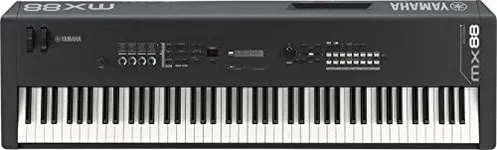
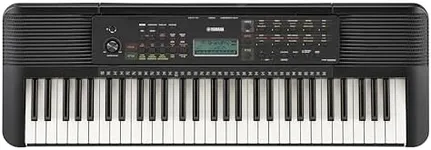
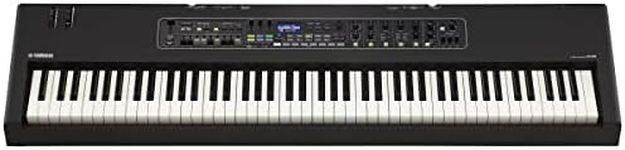
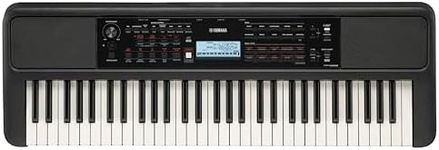
Choosing the right synthesizer keyboard can be a thrilling yet daunting task, especially with the wide variety of options available. The key to making the best choice is understanding your own needs and preferences, and then matching those with the specifications of the synthesizer. Whether you're a beginner, a seasoned musician, or a producer, knowing what to look for will help you find the perfect instrument to create your desired soundscapes.Number of KeysThe number of keys on a synthesizer keyboard determines the range of notes you can play. This spec is important because it affects the versatility and playability of the instrument. Synthesizers typically come with 25, 37, 49, 61, or 88 keys. A 25-key synthesizer is compact and portable, ideal for beginners or those with limited space. A 49 or 61-key model offers a good balance between range and size, suitable for most players. An 88-key synthesizer provides the full range of a piano, perfect for classical pianists or those who need extensive range for complex compositions. Consider your playing style and space constraints when choosing the number of keys.
PolyphonyPolyphony refers to the number of notes a synthesizer can play simultaneously. This spec is crucial for creating rich, layered sounds. Synthesizers can have monophonic (one note at a time), paraphonic (multiple notes but sharing the same filter and envelope), or polyphonic (multiple independent notes) capabilities. Monophonic synthesizers are great for bass lines and lead melodies. Paraphonic synthesizers offer a middle ground, allowing some chordal play. Polyphonic synthesizers are ideal for complex chords and layered textures. Your choice should depend on the type of music you want to create and whether you need to play multiple notes at once.
Sound EngineThe sound engine is the heart of a synthesizer, determining how it generates and shapes sound. There are several types of sound engines, including analog, digital, and hybrid. Analog synthesizers produce warm, rich sounds and are favored for their classic tone. Digital synthesizers offer a wide range of sounds and are often more versatile, with features like sample playback and complex modulation. Hybrid synthesizers combine both analog and digital elements, providing a balance of warmth and versatility. Consider the type of sound you prefer and the genres you play when choosing a sound engine.
ConnectivityConnectivity options determine how you can integrate the synthesizer with other equipment. This spec is important for expanding your setup and workflow. Common connectivity options include MIDI (for connecting to other MIDI devices or computers), USB (for direct connection to a computer), CV/Gate (for controlling modular gear), and audio outputs (for connecting to amplifiers or recording devices). If you plan to use the synthesizer in a studio setup, look for models with comprehensive connectivity options. For live performances, ensure it has the necessary outputs to connect to PA systems or mixers.
Built-in EffectsBuilt-in effects enhance the sound of a synthesizer by adding reverb, delay, chorus, and other audio effects. This spec is important for shaping your sound without needing external processors. Synthesizers with built-in effects allow you to experiment and create unique sounds directly on the instrument. If you enjoy tweaking and customizing your sound, look for models with a variety of high-quality effects. For those who prefer a straightforward approach, a synthesizer with basic effects might be sufficient.
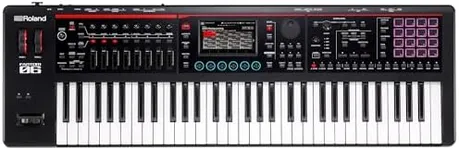
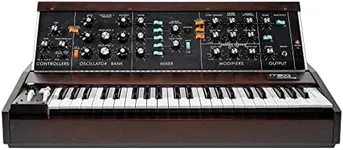
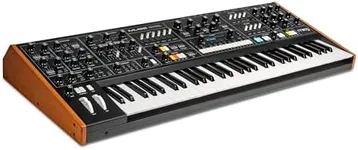
User InterfaceThe user interface includes the layout of controls, display, and overall ease of use. This spec is crucial for how intuitively you can navigate and manipulate the synthesizer's features. Synthesizers with a well-designed interface make it easier to access and adjust parameters, which is especially important during live performances or complex sound design sessions. Beginners might prefer a simpler interface with fewer controls, while experienced users might appreciate more knobs, sliders, and a detailed display for precise control. Consider how comfortable you are with technology and how much control you want over your sound.
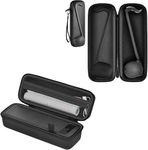
![Case Compatible with Otamatone [English Edition] Japanese Electronic Musical Instrument Portable Synthesizer, Instrumental Music Toy Storage Holder for Otamatone Regular Size (Box Only) (White)](https://images-proxy.bestreviews.guide/Prvgok04JSQ9r870JZoJgelMM9E=/0x150/https://m.media-amazon.com/images/I/51IZUiDnynL._AC_CX679_.jpg)