Buying Guide for the Best 88 Key Synthesizer
Choosing the right 88-key synthesizer can be a rewarding experience, especially if you know what to look for. Synthesizers come with a variety of features and specifications that can greatly influence your playing experience and the kind of music you can create. Understanding these key specs will help you make an informed decision and find the best fit for your needs. Here are some important aspects to consider when selecting an 88-key synthesizer.Key ActionKey action refers to the feel and responsiveness of the keys when you play them. This is important because it affects your playing comfort and technique. Key actions can be weighted, semi-weighted, or unweighted. Weighted keys mimic the feel of an acoustic piano and are ideal for classical and jazz pianists. Semi-weighted keys offer a balance between the resistance of weighted keys and the lightness of unweighted keys, making them suitable for a variety of music styles. Unweighted keys are lighter and more responsive, which can be great for fast synth playing and electronic music. Choose the key action that best matches your playing style and the type of music you intend to create.
Sound EngineThe sound engine is the core of the synthesizer, determining the quality and variety of sounds it can produce. This is crucial because it directly impacts the range of music you can create. Synthesizers may use analog, digital, or hybrid sound engines. Analog engines are known for their warm, rich tones and are favored in genres like rock and electronic music. Digital engines offer a wide range of sounds and are versatile for various music styles. Hybrid engines combine the best of both worlds, providing both warmth and versatility. Consider what kind of sounds you need and choose a synthesizer with a sound engine that aligns with your musical goals.
PolyphonyPolyphony refers to the number of notes a synthesizer can play simultaneously. This is important for creating complex and layered sounds. Synthesizers can have polyphony ranging from 8 to 128 notes or more. Lower polyphony (8-32 notes) may be sufficient for simpler compositions and solo performances. Higher polyphony (64-128 notes) is better for complex arrangements, orchestral pieces, and performances that require multiple layers of sound. Think about the complexity of the music you want to create and choose a synthesizer with adequate polyphony to meet those needs.
ConnectivityConnectivity options determine how you can integrate the synthesizer with other equipment and software. This is important for expanding your setup and enhancing your music production capabilities. Common connectivity options include MIDI, USB, audio outputs, and CV/Gate. MIDI and USB allow you to connect the synthesizer to computers and other MIDI-compatible devices for recording and controlling other instruments. Audio outputs are essential for connecting to amplifiers, mixers, and recording equipment. CV/Gate is useful for integrating with modular synth setups. Consider your current and future setup needs and choose a synthesizer with the appropriate connectivity options.
Built-in EffectsBuilt-in effects such as reverb, delay, chorus, and distortion can enhance your sound and add depth to your music. This is important for creating a polished and professional sound without needing additional external effects units. Synthesizers with a variety of built-in effects allow you to experiment and shape your sound directly on the instrument. If you enjoy tweaking and customizing your sounds, look for a synthesizer with a comprehensive set of built-in effects. If you prefer a more straightforward approach, a synthesizer with basic effects might be sufficient.
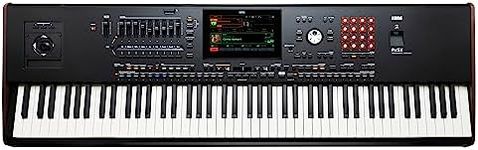
User InterfaceThe user interface includes the layout of controls, display screen, and overall ease of use. This is important because it affects how easily you can navigate and manipulate the synthesizer's features. A well-designed user interface can make the learning curve less steep and enhance your creative workflow. Look for a synthesizer with an intuitive layout, clear labeling, and a display screen that provides useful information. If you are a beginner, a simpler interface with fewer controls might be more approachable. Advanced users might prefer a more complex interface with extensive control options for deeper sound manipulation.