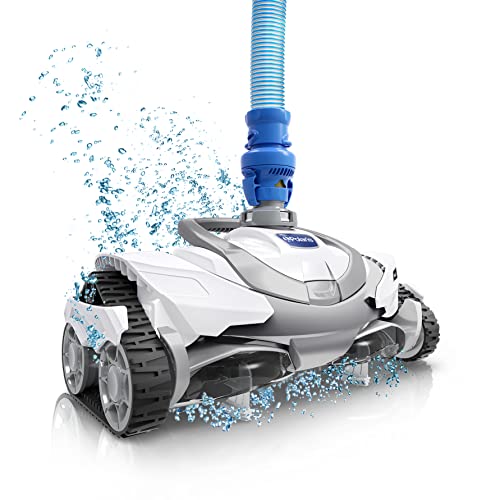
Buying Guide for the Best Suction Side Pool Cleaners
Choosing the right suction-side pool cleaner can make maintaining your pool much easier and more efficient. These cleaners connect to your pool's existing filtration system and use the suction power to move around and clean the pool. To find the best fit for your needs, it's important to understand the key specifications and how they impact performance. Here are the main specs to consider when selecting a suction-side pool cleaner.Pool Size CompatibilityPool size compatibility refers to the maximum pool size that the cleaner can effectively clean. This is important because a cleaner that is too small for your pool will not be able to cover the entire area efficiently. Pool cleaners are generally categorized for small, medium, and large pools. For small pools (up to 20,000 gallons), a basic model will suffice. For medium pools (20,000 to 30,000 gallons), look for a cleaner with a bit more power and range. For large pools (over 30,000 gallons), you will need a high-capacity cleaner with extended reach and stronger suction. Choose a cleaner that matches your pool size to ensure thorough cleaning.
Suction PowerSuction power determines how effectively the cleaner can pick up debris from the pool floor and walls. This is crucial for maintaining a clean pool, as insufficient suction will leave dirt and debris behind. Suction power is often measured in gallons per minute (GPM). Low suction power (up to 20 GPM) is suitable for pools with minimal debris. Medium suction power (20-40 GPM) is ideal for pools with moderate debris. High suction power (over 40 GPM) is necessary for pools that frequently accumulate a lot of debris. Consider the typical amount of debris in your pool to choose the right suction power.
Hose LengthHose length is the total length of the hose that connects the cleaner to the pool's filtration system. This is important because the hose needs to be long enough to reach all areas of your pool. Hose lengths typically range from 30 to 50 feet. For small pools, a shorter hose (up to 30 feet) is sufficient. For medium pools, a hose length of 30-40 feet is recommended. For large pools, a hose length of 40-50 feet or more may be necessary. Ensure the hose length is adequate for your pool size to avoid areas being missed during cleaning.
Climbing AbilityClimbing ability refers to the cleaner's capability to climb and clean the walls of the pool, not just the floor. This is important for maintaining the overall cleanliness of the pool, as dirt and algae can accumulate on the walls. Some cleaners are designed only for floor cleaning, while others can climb walls and even steps. If your pool has a lot of vertical surfaces or steps, choose a cleaner with good climbing ability. For pools with simple designs and minimal vertical surfaces, a floor-only cleaner may be sufficient.
Debris HandlingDebris handling refers to the type and size of debris that the cleaner can effectively pick up. This is important because different pools have different types of debris, such as leaves, sand, or small pebbles. Some cleaners are designed for fine debris, while others can handle larger debris. For pools with fine debris like sand and dirt, choose a cleaner with fine filtration capabilities. For pools with larger debris like leaves and twigs, look for a cleaner with a larger intake and debris bag. Consider the typical debris in your pool to select the appropriate debris handling capability.
Ease of MaintenanceEase of maintenance refers to how simple it is to clean and maintain the pool cleaner. This is important because regular maintenance ensures the cleaner operates efficiently and has a longer lifespan. Some cleaners have easy-to-access parts and simple cleaning procedures, while others may require more effort. Look for cleaners with features like easy-to-remove debris bags, simple hose connections, and minimal moving parts. If you prefer low-maintenance options, choose a cleaner that is known for its ease of maintenance.