Buying Guide for the Best Pressure Side Pool Cleaners
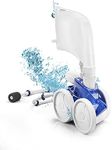
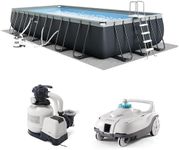
Pressure-side pool cleaners are a great way to keep your pool clean with minimal effort. These devices use the pressure from your pool's pump to move around and collect debris, making pool maintenance easier and more efficient. When choosing a pressure-side pool cleaner, it's important to consider several key specifications to ensure you get the best fit for your pool's size, shape, and your cleaning needs.Pool Size CompatibilityPool size compatibility refers to the maximum pool size that the cleaner can effectively clean. This is important because a cleaner that is too small for your pool will not be able to cover the entire area, leaving parts of your pool dirty. Pool cleaners are often rated for small, medium, or large pools. If you have a small pool, a cleaner rated for small pools will suffice. For larger pools, you will need a cleaner that can handle the increased area to ensure thorough cleaning.
Hose LengthThe hose length is the length of the hose that comes with the pool cleaner. This is important because the hose needs to be long enough to reach all areas of your pool. Hose lengths can vary, with some cleaners offering hoses as short as 30 feet and others as long as 50 feet or more. To choose the right hose length, measure the longest distance from your pool's skimmer or dedicated pressure line to the farthest point in your pool. Ensure the hose length of the cleaner you choose is at least this long.
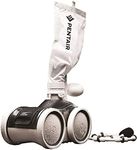
Debris Bag CapacityThe debris bag capacity refers to how much debris the cleaner can hold before it needs to be emptied. This is important because a larger capacity means the cleaner can run longer without needing maintenance. Debris bag capacities can range from small (holding a few liters) to large (holding several liters). If your pool tends to collect a lot of debris, such as leaves or dirt, a cleaner with a larger debris bag will be more convenient and efficient.
Cleaning PowerCleaning power refers to the ability of the cleaner to pick up different types of debris, from fine particles like sand to larger debris like leaves. This is important because a cleaner with higher cleaning power will be more effective at keeping your pool clean. Cleaners are often rated for light, medium, or heavy-duty cleaning. If your pool is surrounded by trees or gets a lot of use, a cleaner with higher cleaning power will be necessary to keep it clean.
Ease of MaintenanceEase of maintenance refers to how easy it is to clean and maintain the pool cleaner. This is important because a cleaner that is difficult to maintain will require more time and effort to keep in good working condition. Look for cleaners with easily accessible parts and simple mechanisms for emptying the debris bag and cleaning the filter. If you prefer a low-maintenance option, choose a cleaner that is known for its ease of use and minimal maintenance requirements.
DurabilityDurability refers to how well the cleaner is built and how long it will last. This is important because a more durable cleaner will provide better value over time. Durability can be assessed by looking at the materials used in the cleaner's construction and the quality of its components. Cleaners made with high-quality materials and robust construction will generally last longer and perform better. If you want a cleaner that will last for many seasons, choose one with a reputation for durability.