Buying Guide for the Best Spotting Scope For Iphone
When choosing a spotting scope for your iPhone, it's important to consider several key specifications to ensure you get the best fit for your needs. A spotting scope can greatly enhance your ability to capture distant objects with clarity and detail, making it a valuable tool for birdwatching, nature observation, or even stargazing. Understanding the key specs will help you make an informed decision and get the most out of your purchase.MagnificationMagnification refers to how much closer the object will appear through the spotting scope compared to the naked eye. This is important because higher magnification allows you to see more detail. Spotting scopes typically offer magnification ranges from 15x to 60x. For general use, a magnification of 20x to 40x is usually sufficient. If you need to see very fine details or observe objects at great distances, you might prefer a higher magnification. However, higher magnification can also make the image shakier and harder to stabilize, so consider your specific needs and how steady you can keep the scope.
Objective Lens DiameterThe objective lens diameter is the size of the front lens of the spotting scope, measured in millimeters. This spec is important because a larger objective lens allows more light to enter the scope, resulting in a brighter and clearer image, especially in low-light conditions. Common sizes range from 50mm to 100mm. If you plan to use the scope in various lighting conditions, a larger objective lens (70mm to 100mm) is beneficial. For daytime use or if portability is a concern, a smaller lens (50mm to 70mm) might be more suitable.
Field of ViewField of view (FOV) is the width of the area you can see through the spotting scope at a specific distance, usually measured in feet at 1,000 yards. A wider FOV is important for tracking moving objects and scanning large areas. Spotting scopes with a lower magnification typically offer a wider FOV. If you need to observe fast-moving subjects or want to cover more area, look for a scope with a wider FOV. For detailed observation of stationary objects, a narrower FOV with higher magnification might be more appropriate.
Eye ReliefEye relief is the distance from the eyepiece to your eye where you can still see the full field of view. This is particularly important for eyeglass wearers. Longer eye relief (15mm or more) is more comfortable and allows you to see the entire image without straining. If you wear glasses, look for a spotting scope with longer eye relief. If you don't wear glasses, shorter eye relief might be acceptable, but comfort should still be a priority.
Lens CoatingLens coating refers to the special coatings applied to the lenses to reduce glare and improve light transmission. This is important for achieving a clearer and brighter image. There are different levels of coating: coated, fully coated, multi-coated, and fully multi-coated. Fully multi-coated lenses offer the best performance by maximizing light transmission and reducing reflections. For the best image quality, choose a spotting scope with fully multi-coated lenses. If you're on a tighter budget, multi-coated lenses can still provide good performance.
Waterproof and FogproofWaterproof and fogproof features ensure that the spotting scope can withstand harsh weather conditions and prevent internal fogging. This is important for outdoor use, especially in humid or rainy environments. Look for scopes that are nitrogen-purged and O-ring sealed for the best protection. If you plan to use the scope in various weather conditions, these features are essential to maintain clear visibility and protect your investment.
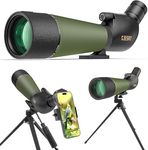
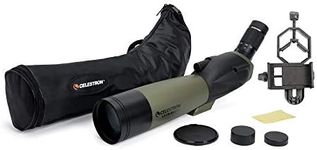
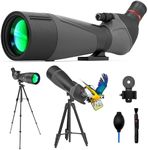
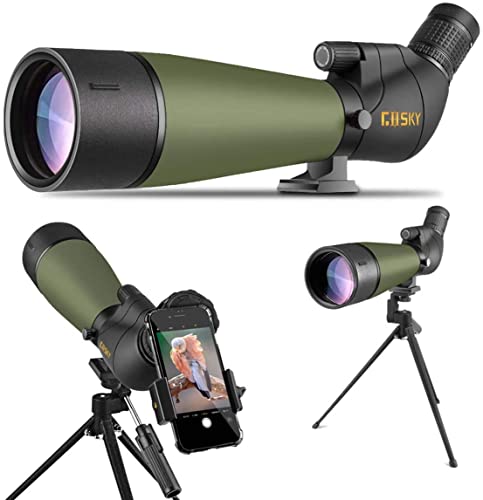
Compatibility with iPhoneCompatibility with your iPhone is crucial for capturing images and videos. This involves ensuring that the spotting scope can securely attach to your iPhone and that the camera aligns properly with the eyepiece. Many spotting scopes come with specific adapters or mounts designed for smartphones. Check that the scope you choose either includes a compatible adapter or that one is available for your iPhone model. This will ensure you can easily and effectively use your iPhone with the spotting scope.