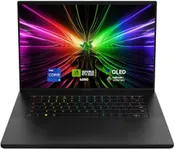
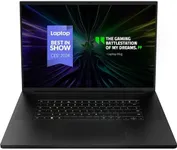
Buying Guide for the Best Razer Gaming Laptops
Choosing the right gaming laptop can be a daunting task, especially with the myriad of options available. It's important to understand the key specifications that will impact your gaming experience. By focusing on these specs, you can ensure that you pick a laptop that meets your needs and provides the best performance for your favorite games.Processor (CPU)The processor, or CPU, is the brain of your laptop. It handles all the instructions from your software and games. For gaming laptops, a powerful CPU is crucial as it affects the overall performance and speed of your games. CPUs are typically divided into segments like Intel Core i5, i7, and i9, or AMD Ryzen 5, 7, and 9. For casual gaming, an Intel Core i5 or AMD Ryzen 5 might suffice. For more demanding games and multitasking, consider an Intel Core i7 or i9, or AMD Ryzen 7 or 9. Your choice should be guided by the types of games you play and whether you plan to use the laptop for other intensive tasks like video editing.
Graphics Card (GPU)The graphics card, or GPU, is responsible for rendering images, videos, and animations. It's a critical component for gaming laptops as it directly impacts the visual quality and frame rates of your games. GPUs are categorized into entry-level, mid-range, and high-end. Entry-level GPUs are suitable for older or less demanding games, while mid-range GPUs can handle most modern games at decent settings. High-end GPUs are designed for the latest games at the highest settings and resolutions. Choose a GPU based on the games you play and the visual quality you desire.
RAMRAM, or Random Access Memory, is the short-term memory of your laptop. It stores data that your CPU needs quick access to while running programs and games. More RAM allows for smoother multitasking and better performance in games. Gaming laptops typically come with 8GB, 16GB, or 32GB of RAM. 8GB is the minimum for gaming, but 16GB is recommended for better performance and future-proofing. If you plan to run multiple applications simultaneously or play highly demanding games, consider 32GB.
StorageStorage refers to where your data, games, and applications are stored. Gaming laptops usually come with either Hard Disk Drives (HDDs) or Solid State Drives (SSDs). SSDs are faster and more reliable than HDDs, leading to quicker load times and better overall performance. Storage capacity is typically measured in gigabytes (GB) or terabytes (TB). For gaming, a minimum of 512GB SSD is recommended, but 1TB or more is ideal if you have a large library of games. Consider your storage needs based on the number and size of games you plan to install.
DisplayThe display is where you see the output from your laptop. For gaming, the resolution, refresh rate, and size of the display are important factors. Common resolutions include Full HD (1920x1080), Quad HD (2560x1440), and 4K (3840x2160). Higher resolutions provide better image quality. Refresh rates, measured in Hertz (Hz), indicate how often the screen updates per second. Higher refresh rates (120Hz, 144Hz, 240Hz) result in smoother gameplay. Display size is a personal preference, but 15-inch and 17-inch screens are common for gaming laptops. Choose a display based on your visual preferences and the space you have for your laptop.
Battery LifeBattery life determines how long your laptop can run on a single charge. Gaming laptops typically have shorter battery life due to their powerful components. If you plan to use your laptop primarily at home or near a power source, battery life may be less critical. However, if you need portability and plan to game on the go, look for a laptop with longer battery life. Keep in mind that gaming will drain the battery faster than regular use.
Cooling SystemThe cooling system in a gaming laptop is essential to prevent overheating during intense gaming sessions. Effective cooling systems include multiple fans, heat pipes, and vents to dissipate heat. A laptop with a good cooling system will maintain performance and longevity. If you plan to game for extended periods, prioritize laptops with advanced cooling solutions to ensure your laptop stays cool and performs optimally.
Keyboard and Build QualityThe keyboard and build quality of a gaming laptop can significantly impact your gaming experience. Look for keyboards with good key travel, tactile feedback, and customizable RGB lighting. Build quality should be sturdy and durable to withstand long gaming sessions and travel. Consider your comfort and preferences when choosing a laptop with a keyboard and build quality that suits your gaming style.