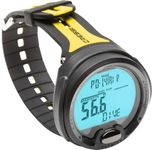
Buying Guide for the Best Freediving Watch
Choosing the right freediving watch is crucial for ensuring safety, tracking performance, and enhancing your overall diving experience. A freediving watch is a specialized device designed to help divers monitor their depth, time underwater, and other vital parameters. When selecting a freediving watch, it's important to consider several key specifications to find the best fit for your needs. Understanding these specs will help you make an informed decision and choose a watch that aligns with your diving goals and preferences.Depth RatingThe depth rating indicates the maximum depth at which the watch can operate safely. This spec is important because it ensures the watch can withstand the pressure at the depths you plan to dive. Depth ratings are usually measured in meters or feet. For recreational freedivers, a watch with a depth rating of 100 meters (330 feet) is typically sufficient. For more advanced or professional divers, a higher depth rating, such as 200 meters (660 feet) or more, may be necessary. Choose a depth rating that matches or exceeds the maximum depth you plan to dive to ensure reliability and safety.
Dive TimeDive time refers to the duration the watch can accurately track while you are underwater. This is important for monitoring how long you have been submerged, which is crucial for managing your breath-hold and ensuring you surface safely. Watches with longer dive time tracking capabilities are beneficial for extended dives. If you are a beginner, a watch that tracks up to 30 minutes may be sufficient. For more experienced divers who undertake longer dives, look for a watch that can track up to 60 minutes or more.
Surface IntervalSurface interval is the time you spend on the surface between dives. This spec is important for tracking your recovery time and ensuring you have adequate rest before your next dive. Watches that can log and display surface intervals help you manage your dive sessions more effectively. For casual divers, a basic surface interval tracking feature may be enough. However, for those who dive frequently or train intensively, a watch with detailed surface interval logging and alerts can be very useful.
Alarm and AlertsAlarms and alerts are features that notify you of important information, such as reaching a certain depth, exceeding a set dive time, or needing to start your ascent. These features are crucial for maintaining safety and ensuring you stay within your limits. Basic models may offer simple depth and time alarms, while more advanced watches provide customizable alerts for various parameters. If you are new to freediving, a watch with basic alarms may suffice. Experienced divers may prefer watches with more advanced and customizable alert options to tailor their diving experience.
Logbook FunctionThe logbook function allows the watch to store data from your dives, such as depth, time, and surface intervals. This is important for tracking your progress, analyzing your performance, and planning future dives. Watches with larger memory can store more dive logs, which is beneficial for frequent divers. Beginners might be content with a watch that stores a few recent dives, while advanced divers who want to track long-term progress should look for a watch with extensive logbook capabilities.
Battery LifeBattery life indicates how long the watch can operate before needing a recharge or battery replacement. This is important to ensure your watch remains functional throughout your diving sessions. Battery life can vary significantly between models, with some offering a few days of use and others lasting several months. If you dive frequently or go on extended trips, a watch with a longer battery life is advantageous. For occasional divers, a shorter battery life may be acceptable as long as it meets your diving schedule.
User InterfaceThe user interface refers to how easy it is to navigate and use the watch's features. This is important for quickly accessing information and making adjustments while diving. A clear, intuitive interface with easy-to-read displays and simple controls is ideal. Beginners should look for watches with straightforward interfaces and minimal complexity. Experienced divers might appreciate more advanced interfaces with additional features and customization options.