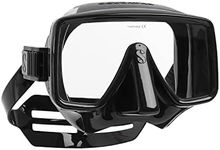
Buying Guide for the Best Freediving Mask
Choosing the right freediving mask is crucial for a comfortable and enjoyable diving experience. A good mask will provide a clear view underwater, fit comfortably on your face, and minimize the amount of air you need to equalize. When selecting a freediving mask, consider the following key specifications to ensure you find the best fit for your needs.Fit and ComfortThe fit and comfort of a freediving mask are paramount because an ill-fitting mask can cause discomfort and leaks. To ensure a good fit, try the mask on and check for any pressure points or gaps. The mask should create a seal around your face without being too tight. A comfortable mask will allow you to focus on your dive rather than adjusting your gear.
VolumeThe volume of a freediving mask refers to the amount of air space inside the mask. Low-volume masks are preferred for freediving because they require less air to equalize, making it easier to dive deeper. If you are a beginner, start with a low to medium volume mask to get used to equalizing. Experienced divers often opt for ultra-low volume masks for deeper dives.
Field of VisionThe field of vision is the range of view you have while wearing the mask. A wider field of vision allows you to see more of your surroundings, which can enhance your diving experience and safety. Masks with a wide field of vision are ideal for exploring underwater environments. If you prioritize seeing as much as possible, look for masks with large lenses and minimal frame obstruction.
Lens MaterialThe lens material affects the clarity and durability of the mask. Tempered glass lenses are the most common and provide excellent clarity and scratch resistance. Some masks feature plastic lenses, which are lighter but may scratch more easily. For most divers, tempered glass lenses are the best choice for their durability and clear view.
Skirt MaterialThe skirt is the part of the mask that seals against your face. Silicone skirts are the most popular because they are soft, flexible, and create a good seal. Some masks use rubber skirts, which are less expensive but may not be as comfortable or durable. If you plan to dive frequently, a silicone skirt is a better investment for long-term comfort and performance.
Strap and Buckle SystemThe strap and buckle system helps secure the mask to your head. Look for a mask with an adjustable strap and a reliable buckle system that allows for easy adjustments. A good strap and buckle system will keep the mask in place without causing discomfort. If you have long hair, consider a mask with a split strap to prevent tangling.