Buying Guide for the Best Commercial Paint Sprayers
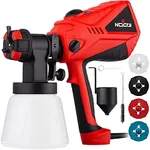
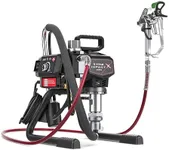
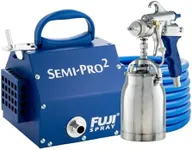
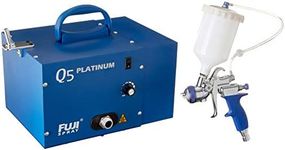
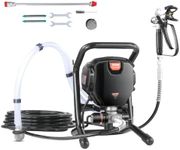
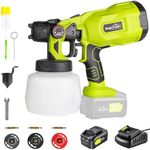
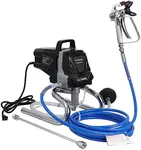
Choosing the right commercial paint sprayer can significantly impact the efficiency and quality of your painting projects. Whether you're a professional painter or a business owner looking to handle large-scale painting tasks, understanding the key specifications of paint sprayers will help you make an informed decision. Here are the essential specs to consider and how to navigate them to find the best fit for your needs.Type of Paint SprayerThere are several types of paint sprayers, including airless, HVLP (High Volume Low Pressure), and compressed air sprayers. Airless sprayers are great for large surfaces and thick coatings, HVLP sprayers are ideal for detailed work and fine finishes, and compressed air sprayers are versatile but require an air compressor. Choose based on the scale and detail of your projects.
Spray Tip SizeThe spray tip size determines the width and thickness of the paint application. Smaller tips (e.g., 0.009-0.013 inches) are suitable for fine finishes and detailed work, while larger tips (e.g., 0.017-0.021 inches) are better for broad surfaces and thicker coatings. Match the tip size to the type of paint and the surface area you plan to cover.
Flow RateFlow rate, measured in gallons per minute (GPM), indicates how much paint the sprayer can apply in a given time. Higher flow rates (e.g., 0.5-1 GPM) are ideal for large projects and faster coverage, while lower flow rates (e.g., 0.2-0.4 GPM) are better for smaller, detailed tasks. Consider the size of your projects to determine the appropriate flow rate.
Pressure ControlPressure control allows you to adjust the force at which paint is sprayed. Higher pressure settings (e.g., 2000-3000 PSI) are useful for thicker paints and faster coverage, while lower settings (e.g., 500-1500 PSI) are better for detailed work and thinner paints. Choose a sprayer with adjustable pressure to handle various types of paint and surfaces.
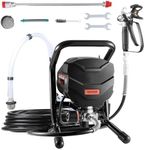
Hose LengthThe hose length affects your mobility and reach. Longer hoses (e.g., 50-100 feet) are beneficial for large areas and hard-to-reach places, while shorter hoses (e.g., 25-50 feet) are easier to manage and store. Consider the size of your workspace and the distance from the paint source to the application area.
Material CompatibilityDifferent sprayers are compatible with various materials, such as latex, oil-based paints, stains, and varnishes. Ensure the sprayer you choose can handle the types of materials you plan to use. This will prevent clogging and ensure a smooth application.
Ease of CleaningCleaning a paint sprayer can be time-consuming, so look for models with features that simplify this process, such as easy-to-remove parts and self-cleaning functions. A sprayer that is easy to clean will save you time and extend the life of the equipment.
Durability and Build QualityCommercial paint sprayers should be built to withstand frequent use and harsh conditions. Look for models made from high-quality materials like stainless steel and those with robust construction. A durable sprayer will provide reliable performance and a longer lifespan.