Buying Guide for the Best Coil Spring Compressors
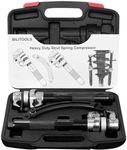
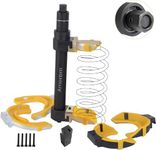
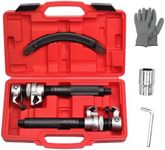
Choosing the right coil spring compressor is crucial for safely and effectively working on your vehicle's suspension system. A coil spring compressor is a tool used to compress the coil springs in your car, making it easier to remove or install them. When selecting a coil spring compressor, it's important to consider several key specifications to ensure you get the best fit for your needs. Understanding these specifications will help you make an informed decision and ensure that the tool you choose is safe, reliable, and suitable for your specific vehicle and tasks.Type of Coil Spring CompressorThere are mainly two types of coil spring compressors: internal and external. Internal compressors are inserted inside the spring and are generally used for smaller, lighter springs. External compressors clamp onto the outside of the spring and are used for larger, heavier springs. The type you choose depends on the size and type of springs you are working with. For most passenger vehicles, an external compressor is usually more versatile and easier to use.
Maximum Load CapacityThe maximum load capacity indicates the amount of weight the compressor can safely handle. This is important because using a compressor with insufficient capacity can be dangerous. Load capacities are typically measured in pounds or kilograms. For light-duty work on smaller vehicles, a compressor with a lower capacity (around 1,000 pounds) may suffice. For heavier vehicles or more demanding tasks, look for a compressor with a higher capacity (up to 2,500 pounds or more). Always choose a compressor that exceeds the weight of the springs you will be working with to ensure safety.
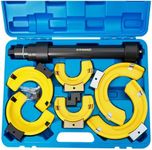
Jaw Design and RangeThe jaw design and range refer to the size and shape of the compressor's jaws, which grip the spring. This is important because the jaws need to fit securely around the spring to compress it safely. Some compressors have adjustable jaws that can accommodate a range of spring sizes, while others are designed for specific spring diameters. If you work on a variety of vehicles, an adjustable jaw design with a wide range is more versatile. For specific vehicles, a compressor with fixed jaws designed for that vehicle's spring size may be more efficient.
Safety FeaturesSafety features are critical when working with coil spring compressors, as improper use can lead to serious injury. Look for compressors with built-in safety mechanisms such as locking pins, safety latches, or overload protection. These features help ensure that the spring remains securely compressed and reduce the risk of accidental release. Always prioritize safety features when choosing a compressor, especially if you are not experienced with using these tools.
Ease of UseEase of use refers to how user-friendly the compressor is. This includes factors like the weight of the tool, the complexity of the setup, and the effort required to operate it. A lighter, more compact compressor is easier to handle and maneuver, especially in tight spaces. Tools with clear instructions and simple mechanisms are preferable for beginners. If you plan to use the compressor frequently, look for one that is ergonomically designed to reduce fatigue and make the process smoother.
Durability and Build QualityDurability and build quality are important for ensuring that your coil spring compressor will last through multiple uses and withstand the pressures involved in compressing springs. Look for compressors made from high-quality materials such as hardened steel, which offer better strength and longevity. Check for user reviews or manufacturer guarantees to get an idea of the tool's reliability. A well-built compressor will not only last longer but also provide a safer and more stable performance.