Buying Guide for the Best Artwork Scanner Flatbed
Choosing the right flatbed scanner for artwork can be a daunting task, but with the right knowledge, you can find a model that perfectly suits your needs. Flatbed scanners are ideal for scanning artwork because they provide a flat surface that can accommodate various sizes and types of media. When selecting a flatbed scanner, consider the following key specifications to ensure you get the best fit for your artistic needs.ResolutionResolution, measured in dots per inch (DPI), determines the level of detail the scanner can capture. Higher resolution is crucial for artwork to ensure that fine details and textures are accurately reproduced. For general artwork scanning, a resolution of 600 DPI is usually sufficient. However, for highly detailed or large pieces, you might want to consider a scanner with 1200 DPI or higher. Choose a resolution based on the level of detail in your artwork and how you plan to use the scanned images.
Color DepthColor depth, measured in bits, indicates how many colors the scanner can capture. A higher color depth means more accurate and vibrant color reproduction. For artwork, a color depth of at least 24-bit is recommended, but 48-bit is ideal for capturing subtle color variations and gradients. If your artwork relies heavily on color accuracy, opt for a scanner with higher color depth.
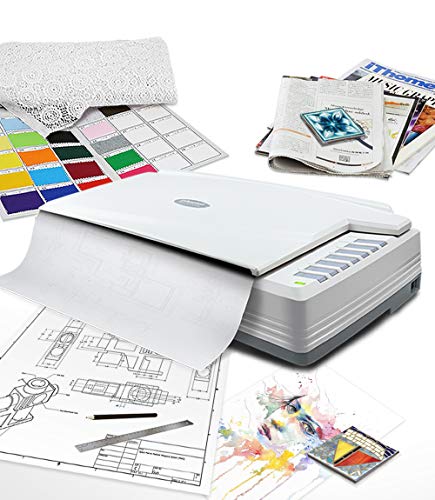
Scan AreaThe scan area refers to the maximum size of the document or artwork that the scanner can accommodate. Standard flatbed scanners typically offer a scan area of 8.5 x 11 inches, which is suitable for most small to medium-sized artworks. If you work with larger pieces, look for a scanner with a larger scan area, such as 11 x 17 inches or more. Choose a scan area based on the size of the artwork you frequently scan.
ConnectivityConnectivity options determine how the scanner connects to your computer or other devices. Common options include USB, Wi-Fi, and Ethernet. USB is the most straightforward and reliable, while Wi-Fi offers the convenience of wireless scanning. Ethernet is useful for networked environments. Consider your workspace setup and how you prefer to transfer scanned images when choosing connectivity options.
Software CompatibilitySoftware compatibility refers to the scanner's ability to work with various scanning and image editing software. Ensure that the scanner is compatible with the software you use for editing and managing your artwork. Some scanners come with bundled software that offers advanced features like color correction, image stitching, and file organization. Choose a scanner that integrates well with your existing workflow and software preferences.
Scanning SpeedScanning speed, measured in pages per minute (PPM) or seconds per scan, indicates how quickly the scanner can process images. While speed may not be the top priority for artwork scanning, it can be important if you need to scan multiple pieces in a short amount of time. Faster scanning speeds can improve efficiency, especially for high-volume projects. Consider your typical scanning workload and choose a speed that matches your productivity needs.
Build QualityBuild quality refers to the durability and construction of the scanner. A well-built scanner will last longer and provide consistent performance over time. Look for scanners with sturdy materials and reliable mechanisms. If you plan to use the scanner frequently or transport it, consider models with robust build quality to ensure longevity and reliability.