Buying Guide for the Best Amazonbasics Paper Shredders
When choosing a paper shredder, it's important to consider your specific needs and the features that will best meet those needs. Paper shredders come in various types and sizes, each designed for different levels of use and security. Understanding the key specifications will help you make an informed decision and ensure that you select a shredder that is both efficient and secure for your purposes.Shred TypeThe shred type refers to the way the shredder cuts the paper. There are three main types: strip-cut, cross-cut, and micro-cut. Strip-cut shredders cut paper into long, narrow strips and offer the lowest level of security, suitable for non-sensitive documents. Cross-cut shredders cut paper into small pieces, providing a higher level of security and are ideal for most personal and office use. Micro-cut shredders offer the highest level of security by cutting paper into tiny particles, making them suitable for highly confidential documents. Choose the shred type based on the sensitivity of the documents you need to shred.
Sheet CapacitySheet capacity indicates the number of sheets a shredder can handle at once. This is important because it affects how quickly you can shred documents. Shredders with a lower sheet capacity (5-10 sheets) are suitable for light, occasional use. Medium capacity shredders (10-20 sheets) are good for regular use in a small office or home office. High capacity shredders (20+ sheets) are designed for heavy use in larger offices. Consider how often you will be shredding and the volume of documents to determine the right sheet capacity for you.
Run Time and Cool Down TimeRun time refers to how long a shredder can operate continuously before needing to cool down, while cool down time is the period the shredder needs to rest before it can be used again. Short run times (2-5 minutes) with longer cool down times (20-30 minutes) are typical for light-duty shredders. Medium-duty shredders may have run times of 10-20 minutes with similar cool down times. Heavy-duty shredders can run continuously for 30 minutes or more with shorter cool down periods. Choose a shredder with a run time and cool down time that matches your shredding habits and volume.
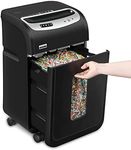
Bin CapacityBin capacity refers to the amount of shredded paper the shredder's waste bin can hold. Smaller bins (1-3 gallons) are suitable for light use and need to be emptied more frequently. Medium bins (4-8 gallons) are good for regular use and require less frequent emptying. Larger bins (9+ gallons) are ideal for heavy use and can hold more shredded material, reducing the frequency of emptying. Consider how often you want to empty the bin and the volume of shredding you will be doing to choose the right bin capacity.
Noise LevelNoise level is an important consideration, especially if you will be using the shredder in a shared or quiet environment. Shredders can vary in noise output, with quieter models producing around 60 decibels and louder models reaching up to 80 decibels or more. If noise is a concern, look for a shredder that is specifically designed to operate quietly. Consider where you will be using the shredder and how much noise you can tolerate to choose the right noise level for your needs.
Safety FeaturesSafety features are important to prevent accidents and ensure safe operation. Common safety features include automatic shut-off when the bin is full or the shredder overheats, safety locks to prevent accidental operation, and sensors that detect hands or objects near the shredder blades. If you have children or pets, or if the shredder will be used in a busy office, look for models with robust safety features. Consider the environment in which the shredder will be used and the potential risks to choose the right safety features.