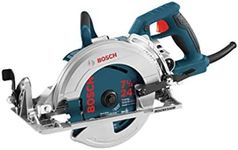
Buying Guide for the Best Worm Drive Saw
Choosing the right worm-drive saw can make a significant difference in your woodworking or construction projects. A worm-drive saw is known for its power and durability, making it a popular choice for professionals and serious DIY enthusiasts. To find the best fit for you, it's important to understand the key specifications and how they align with your needs. Here are the main specs to consider when selecting a worm-drive saw.Motor PowerMotor power, measured in amps, determines how much cutting force the saw can deliver. Higher power means the saw can handle tougher materials and more demanding tasks. For heavy-duty use, such as cutting through thick hardwood or large beams, look for a saw with a motor power of 15 amps or more. For lighter tasks, a motor with 12-14 amps may suffice. Consider the types of projects you will be working on to decide the appropriate motor power for your needs.
Blade SizeThe blade size of a worm-drive saw affects the depth and capacity of cuts you can make. Common blade sizes are 7-1/4 inches, which is versatile for most tasks, and larger blades like 8-1/4 inches for deeper cuts. If you frequently work with thick materials, a larger blade may be beneficial. For general-purpose use, a 7-1/4 inch blade is typically sufficient. Match the blade size to the typical thickness of the materials you will be cutting.
WeightThe weight of the saw can impact your comfort and ease of use, especially during extended periods of operation. Lighter saws, around 13-15 pounds, are easier to handle and maneuver, making them suitable for overhead or prolonged use. Heavier saws, over 15 pounds, may offer more stability and control for precise cuts but can be tiring to use for long durations. Consider your physical strength and the nature of your projects when choosing the weight of your saw.
Bevel CapacityBevel capacity refers to the maximum angle at which the saw can tilt to make angled cuts. A higher bevel capacity, such as 53 degrees, allows for more versatility in cutting angles. If your projects often require angled cuts, such as in framing or roofing, a saw with a higher bevel capacity will be beneficial. For standard straight cuts, a lower bevel capacity may be adequate. Assess the types of cuts you will need to make to determine the right bevel capacity for you.
Durability and Build QualityDurability and build quality are crucial for a tool that will be used in demanding environments. Look for saws made with high-quality materials, such as magnesium or aluminum, which offer a good balance of strength and weight. Features like reinforced housings and robust gears can extend the lifespan of the saw. If you plan to use the saw frequently or in tough conditions, prioritize models known for their durability. For occasional use, a standard build may be sufficient.
Ergonomics and ComfortErgonomics and comfort are important for reducing fatigue and improving control during use. Features like comfortable grips, well-placed handles, and balanced weight distribution can make a significant difference. If you will be using the saw for extended periods, look for models with ergonomic designs that reduce strain on your hands and arms. Test the saw if possible to ensure it feels comfortable and easy to handle.