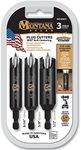
Buying Guide for the Best Wooden Plug Cutters
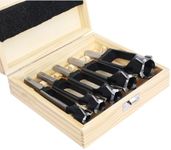
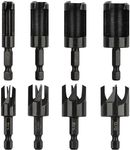
When it comes to choosing wooden plug cutters, it's important to understand that these tools are essential for creating wooden plugs that can be used to cover screw holes or other imperfections in woodworking projects. The right plug cutter will help you achieve a seamless and professional finish. To make an informed decision, you need to consider several key specifications that will determine the performance and suitability of the plug cutter for your specific needs.Material QualityMaterial quality refers to the type of steel or metal used to make the plug cutter. High-quality materials, such as high-speed steel (HSS) or carbon steel, are important because they ensure durability and sharpness, allowing for clean cuts and longer tool life. If you are working on hardwoods or require a tool that will last through many projects, opt for a plug cutter made from high-speed steel. For occasional use or softer woods, carbon steel may be sufficient.
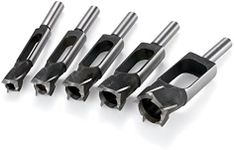
Size RangeThe size range of a plug cutter indicates the diameter of the plugs it can create. This is important because different projects may require different plug sizes to match the screw holes or imperfections you are covering. Plug cutters typically come in sets with various sizes, such as 1/4 inch, 3/8 inch, and 1/2 inch. Choose a set that includes the sizes you most frequently use in your woodworking projects. If you work on a variety of projects, a set with a wider range of sizes will offer more versatility.
Cutting DepthCutting depth refers to how deep the plug cutter can cut into the wood. This is important because it determines the length of the wooden plugs you can create. Deeper cutting depths are useful for thicker materials or when you need longer plugs for a secure fit. If you typically work with thicker wood or need longer plugs, look for a plug cutter with a greater cutting depth. For standard projects, a moderate cutting depth will suffice.
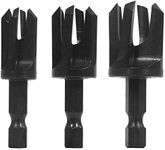
Shank TypeThe shank type of a plug cutter is the part that fits into your drill or drill press. Common shank types include round and hex shanks. This is important because it affects the compatibility and stability of the plug cutter during use. Hex shanks provide better grip and are less likely to slip in the drill chuck, making them ideal for more demanding tasks. Round shanks are generally suitable for lighter tasks and are compatible with most standard drills. Choose a shank type that matches your drill and the intensity of your work.
Ease of UseEase of use encompasses features that make the plug cutter more user-friendly, such as self-ejecting plugs, which automatically remove the plug from the cutter, and clear markings for size identification. These features are important because they can save time and reduce frustration during your projects. If you value convenience and efficiency, look for plug cutters with these user-friendly features. For those who prioritize simplicity and are comfortable with manual plug removal, basic models will work just fine.