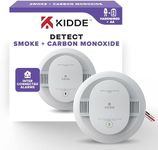
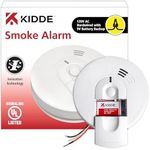
Buying Guide for the Best Wired Smoke Alarms
Choosing the right wired smoke alarm is crucial for ensuring the safety of your home and loved ones. Wired smoke alarms are connected directly to your home's electrical system, providing a reliable power source and often featuring battery backups for added security. When selecting a wired smoke alarm, it's important to consider several key specifications to ensure you get the best fit for your needs. Here are the key specs to look at and how to navigate them.Sensor TypeThe sensor type in a smoke alarm determines how it detects smoke or fire. The main types are ionization, photoelectric, and dual-sensor. Ionization sensors are better at detecting fast-flaming fires, while photoelectric sensors are more responsive to smoldering fires. Dual-sensor alarms combine both technologies for comprehensive protection. Choose a sensor type based on the most likely fire risks in your home. For example, if you have a lot of flammable materials, an ionization sensor might be best, while a photoelectric sensor is ideal for areas prone to slow-burning fires.
InterconnectivityInterconnectivity refers to the ability of multiple smoke alarms to communicate with each other. When one alarm detects smoke, all interconnected alarms will sound. This feature is important for larger homes or multi-story buildings, ensuring that everyone in the house is alerted to danger. Look for alarms that can be interconnected either through wiring or wirelessly. If you have a large home, interconnected alarms are highly recommended for comprehensive coverage.
Power SourceWired smoke alarms are connected to your home's electrical system, but they often come with a battery backup to ensure they work during power outages. The type of battery backup can vary, with some using replaceable batteries and others using sealed, long-life batteries. Consider the convenience and maintenance of each option. Sealed batteries typically last 10 years and require less maintenance, while replaceable batteries need to be changed regularly.
Alarm VolumeThe alarm volume is the loudness of the smoke alarm when it goes off, usually measured in decibels (dB). A louder alarm ensures that it can be heard throughout the house, even when you're asleep. Most smoke alarms have a volume of around 85 dB, which is sufficient for most homes. However, if you have a large home or hearing-impaired individuals, you might want to look for alarms with higher volume or additional alert features like flashing lights.
Smart FeaturesSome modern smoke alarms come with smart features, allowing them to connect to your home Wi-Fi and send alerts to your smartphone. This can be particularly useful if you're away from home often. Smart features can also include integration with other smart home devices, voice alerts, and self-testing capabilities. If you value convenience and advanced monitoring, consider a smoke alarm with smart features.
Ease of InstallationEase of installation is an important factor, especially if you plan to install the smoke alarms yourself. Some models come with easy-to-follow instructions and mounting hardware, while others might require professional installation. Consider your comfort level with electrical work and choose a model that matches your installation capabilities. If you're not comfortable with DIY installation, it might be worth hiring a professional to ensure the alarms are installed correctly.