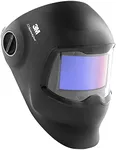
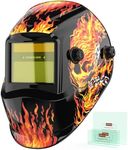
Buying Guide for the Best Welding Helmets With Auto Darkening
Choosing the right welding helmet is crucial for both safety and comfort. Auto-darkening welding helmets are a popular choice because they automatically adjust the lens shade based on the brightness of the welding arc, providing convenience and protection. When selecting an auto-darkening welding helmet, it's important to consider several key specifications to ensure you get the best fit for your needs. Here are the key specs to look at and how to navigate them.Lens Shade RangeThe lens shade range indicates how dark the lens can get to protect your eyes from the bright welding arc. This spec is important because different welding processes require different shade levels. For example, low-amperage TIG welding might need a shade range of 8-13, while high-amperage MIG or stick welding might require a range of 9-13. To pick the right one for you, consider the types of welding you will be doing most frequently and choose a helmet with a shade range that covers those needs.
Reaction TimeReaction time, or switching speed, measures how quickly the lens darkens when the welding arc is struck. This is important because a faster reaction time reduces the risk of eye strain and flash burns. Reaction times are typically measured in milliseconds (ms). Helmets with a reaction time of 1/10,000 to 1/25,000 of a second are considered fast. If you do a lot of welding, especially for extended periods, a faster reaction time will provide better protection and comfort.
Viewing AreaThe viewing area is the size of the lens through which you see while welding. A larger viewing area provides better visibility and can make it easier to see your work and surroundings. Viewing areas can range from around 6 square inches to over 9 square inches. If you need to see more of your work area or if you do detailed work, a larger viewing area might be beneficial. However, if you prefer a lighter helmet or do not need a wide field of view, a smaller viewing area could be sufficient.
Number of Arc SensorsArc sensors detect the welding arc and trigger the auto-darkening feature. More sensors generally mean better coverage and reliability, especially when welding in positions where part of the helmet might be obstructed. Helmets typically have between two to four sensors. If you often weld in awkward positions or need consistent performance, choosing a helmet with more sensors can provide better protection.
AdjustabilityAdjustability refers to the ability to customize the helmet's fit and settings, such as sensitivity, delay, and shade level. This is important for comfort and ensuring the helmet performs well in different welding conditions. Look for helmets with easy-to-use controls that allow you to fine-tune these settings. If you work in varying environments or switch between different welding processes, having a highly adjustable helmet will help you maintain optimal protection and comfort.
Comfort and FitComfort and fit are crucial for long welding sessions. A well-fitting helmet will reduce strain on your neck and head. Look for helmets with adjustable headgear, padding, and a balanced design. Trying on different helmets to see which one feels the most comfortable can help you make the best choice. If you weld for extended periods, prioritize comfort to avoid fatigue and discomfort.
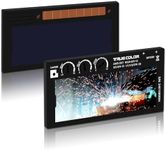
Power SourceAuto-darkening helmets can be powered by batteries, solar cells, or a combination of both. This spec is important because it affects the helmet's reliability and maintenance. Battery-powered helmets may require regular battery changes, while solar-powered helmets can be more convenient but may not work well in low-light conditions. Combination helmets offer the best of both worlds. Consider your work environment and how often you want to deal with power issues when choosing the power source.