Buying Guide for the Best Water Tank Level Sensor
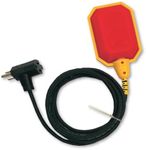
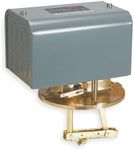
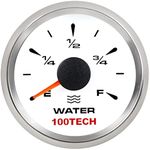
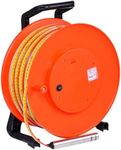
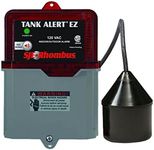
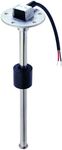
Choosing the right water tank level sensor is crucial for ensuring accurate monitoring and management of water levels in your tank. A good sensor can help prevent overflow, maintain optimal water levels, and ensure efficient water usage. When selecting a water tank level sensor, consider the following key specifications to find the best fit for your needs.Type of SensorThe type of sensor refers to the technology used to measure the water level. Common types include ultrasonic, float, capacitive, and pressure sensors. Ultrasonic sensors use sound waves to detect the water level, float sensors use a buoyant object that rises and falls with the water level, capacitive sensors measure changes in capacitance caused by the water level, and pressure sensors measure the pressure exerted by the water column. The choice of sensor type depends on factors like the tank's environment, the required accuracy, and maintenance considerations. For example, ultrasonic sensors are great for non-contact measurement and high accuracy, while float sensors are simple and reliable for basic applications.
Measurement RangeThe measurement range indicates the maximum and minimum water levels that the sensor can accurately detect. This is important to ensure the sensor can cover the full height of your tank. Measurement ranges can vary widely, from a few centimeters to several meters. To choose the right range, measure the height of your tank and ensure the sensor's range exceeds this height. If your tank is very tall, you might need a sensor with a longer range.
AccuracyAccuracy refers to how close the sensor's readings are to the actual water level. High accuracy is important for applications where precise water level monitoring is critical, such as in industrial processes or water treatment plants. Accuracy is usually expressed in percentage or millimeters. For general household use, a sensor with moderate accuracy may suffice, but for more demanding applications, look for sensors with higher accuracy ratings.
Output TypeThe output type refers to the format in which the sensor provides its readings. Common output types include analog, digital, and wireless. Analog outputs provide a continuous signal that varies with the water level, digital outputs provide discrete signals, and wireless outputs transmit data remotely. The choice of output type depends on your existing system and how you plan to use the data. For integration with modern smart systems, wireless or digital outputs are often preferred.
Installation MethodThe installation method describes how the sensor is mounted and connected to the tank. Some sensors are installed inside the tank, while others are mounted externally. Installation methods can include screw-in, adhesive, or clamp-on options. Consider the ease of installation and maintenance when choosing a sensor. If you prefer minimal intrusion into the tank, external sensors might be a better choice.
Durability and MaterialDurability and material refer to the sensor's ability to withstand the tank environment and its construction quality. Sensors can be made from various materials like plastic, stainless steel, or other corrosion-resistant materials. Durability is crucial if the sensor will be exposed to harsh conditions, such as chemicals or extreme temperatures. Choose a sensor made from materials that are compatible with the water and any other substances in your tank to ensure long-term reliability.
![BlueStars [Upgraded] G52 Backup Val](https://images-proxy.bestreviews.guide/HmeFQJiW4PETpDkx3-mehZljlE8=/0x150/https://m.media-amazon.com/images/I/31Cz7P-rcZL._AC_CX679_.jpg)