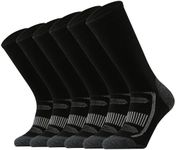
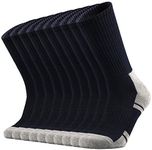
Buying Guide for the Best Warm Work Socks
When it comes to picking the right warm work socks, it's essential to consider various factors that will ensure your feet stay comfortable, dry, and warm throughout the day. Whether you work outdoors in cold weather or in a chilly indoor environment, the right pair of socks can make a significant difference in your overall comfort and performance. Here are some key specifications to consider when choosing warm work socks and how to navigate them to find the best fit for your needs.MaterialThe material of the socks is crucial because it determines the warmth, comfort, and moisture-wicking properties. Common materials include wool, synthetic fibers, and blends. Wool is excellent for warmth and moisture-wicking, making it ideal for very cold conditions. Synthetic fibers like polyester and nylon are good for durability and moisture management, suitable for moderately cold environments. Blends often combine the best properties of both. Choose wool for maximum warmth, synthetic for durability and moisture control, and blends for a balance of both.
ThicknessThickness affects the insulation and cushioning of the socks. Thicker socks provide more warmth and cushioning, which is great for extremely cold conditions and heavy-duty work boots. Medium thickness offers a balance of warmth and comfort, suitable for moderately cold environments and regular work shoes. Thin socks are less insulating but can be good for mild cold and tighter-fitting shoes. Consider the temperature you'll be working in and the fit of your shoes when choosing the thickness.
Fit and SizeA proper fit ensures that the socks stay in place and provide consistent warmth and comfort. Socks that are too tight can restrict circulation, while those that are too loose can bunch up and cause blisters. Look for socks that match your shoe size and have a snug but not constricting fit. Some socks come with added features like arch support and reinforced heels and toes for better fit and durability. Choose a fit that feels comfortable and secure for your foot shape and size.
Moisture-WickingMoisture-wicking properties are important to keep your feet dry and prevent blisters and cold feet. Materials like wool and certain synthetic fibers are good at wicking moisture away from the skin. If you work in an environment where your feet are likely to sweat, prioritize socks with good moisture-wicking capabilities. This will help maintain comfort and prevent issues related to damp feet.
DurabilityDurability is essential for work socks as they need to withstand the rigors of daily wear and tear. Look for socks with reinforced areas, such as the heel and toe, which are prone to wear out faster. High-quality materials and construction will ensure that the socks last longer and provide consistent performance. If your work involves a lot of physical activity or harsh conditions, prioritize durability to get the most out of your socks.
CushioningCushioning provides extra comfort and protection, especially if you spend long hours on your feet. Socks with additional padding in the sole, heel, and toe areas can help reduce foot fatigue and absorb impact. This is particularly important for jobs that require standing or walking on hard surfaces. Choose socks with the right amount of cushioning based on your activity level and the type of footwear you use.