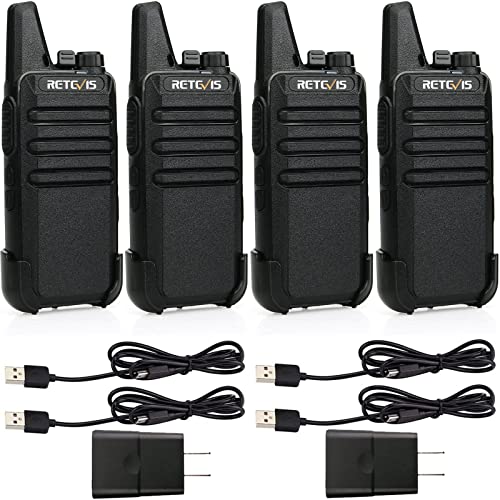
Buying Guide for the Best Walkie Talkies Long Range
Choosing the right walkie-talkie, especially for long-range communication, can be a bit daunting given the variety of models and features available. The key is to understand your specific needs and how different specifications can meet those needs. Whether you're using them for outdoor adventures, professional use, or emergency situations, knowing what to look for will help you make an informed decision.RangeThe range of a walkie-talkie indicates the maximum distance over which it can communicate effectively. This is crucial because it determines how far apart users can be while still maintaining clear communication. Ranges can vary significantly, from a few miles to over 30 miles in ideal conditions. For urban environments with many obstructions, a shorter range might suffice, but for outdoor activities like hiking or camping, a longer range is preferable. Consider where and how you will be using the walkie-talkie to determine the appropriate range.
Frequency BandsWalkie-talkies operate on different frequency bands, primarily FRS (Family Radio Service) and GMRS (General Mobile Radio Service). FRS is suitable for short-range communication and does not require a license, making it ideal for casual use. GMRS offers longer range and more power but requires an FCC license in the U.S. If you need more power and range for professional or extensive outdoor use, GMRS might be the better choice. For family or occasional use, FRS should be sufficient.
Battery LifeBattery life is a critical factor, especially for long-range walkie-talkies used in remote areas where recharging might not be possible. Walkie-talkies can use rechargeable batteries, disposable batteries, or both. Longer battery life ensures that you can communicate for extended periods without interruption. If you plan to use the walkie-talkie for long trips or in emergency situations, opt for models with longer battery life or the ability to use disposable batteries as a backup.
Durability and Weather ResistanceDurability and weather resistance are important if you plan to use your walkie-talkie in harsh conditions. Look for models that are rugged and can withstand drops, dust, and water. Some walkie-talkies are rated with an IP (Ingress Protection) rating, which indicates their resistance to dust and water. For outdoor adventures or professional use in tough environments, choose a model with a high IP rating to ensure reliability and longevity.
Channels and Privacy CodesChannels and privacy codes help reduce interference and ensure clear communication. Walkie-talkies come with multiple channels, and privacy codes (also known as CTCSS or DCS) allow you to filter out unwanted transmissions from other users on the same channel. More channels and privacy codes provide greater flexibility and reduce the likelihood of interference. If you are using the walkie-talkie in a crowded area or for professional purposes, having more channels and privacy codes can be very beneficial.
Size and WeightThe size and weight of a walkie-talkie can affect its portability and ease of use. Smaller, lighter models are easier to carry and handle, making them ideal for activities like hiking or traveling. However, they might have fewer features or shorter battery life. Larger models might offer more features and longer battery life but can be bulkier to carry. Consider how you will be using the walkie-talkie and choose a size and weight that balances portability with functionality.
Additional FeaturesAdditional features such as VOX (voice-activated transmission), built-in flashlights, weather alerts, and emergency alarms can enhance the functionality of your walkie-talkie. VOX allows hands-free operation, which is useful in situations where you need to keep your hands free. Weather alerts can keep you informed of changing conditions, and emergency alarms can be crucial in critical situations. Think about which additional features might be useful for your specific needs and choose a model that includes those features.