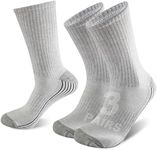
Buying Guide for the Best Thick Work Socks
When it comes to picking the right thick work socks, it's important to consider several key factors to ensure comfort, durability, and suitability for your specific needs. Thick work socks are designed to provide extra cushioning and support, which is essential for those who spend long hours on their feet or work in demanding environments. By understanding the key specifications, you can make an informed decision and choose the best socks for your work conditions.MaterialThe material of the socks is crucial as it affects comfort, durability, and moisture management. Common materials include wool, cotton, and synthetic blends. Wool is excellent for warmth and moisture-wicking, making it ideal for cold environments. Cotton is soft and breathable but may not be as effective in wicking moisture. Synthetic blends often combine the best of both worlds, offering durability, moisture-wicking, and comfort. Choose a material based on your work environment and personal comfort preferences.
CushioningCushioning refers to the thickness and padding of the socks, which provides comfort and protection for your feet. Heavy cushioning is ideal for those who work on hard surfaces or carry heavy loads, as it offers maximum shock absorption. Medium cushioning provides a balance of comfort and breathability, suitable for moderate activity levels. Light cushioning is best for those who need minimal padding and prefer a more breathable sock. Consider the level of physical activity and the type of surfaces you work on when selecting the right cushioning.
Fit and SizeA proper fit is essential for comfort and to prevent blisters or discomfort. Socks that are too tight can restrict circulation, while those that are too loose can bunch up and cause friction. Most socks come in a range of sizes, so refer to the sizing chart provided by the manufacturer to find the best fit. Additionally, consider the height of the socks – crew length is common for work socks, but you may prefer ankle or knee-high socks depending on your work attire and personal preference.
DurabilityDurability is important for work socks as they need to withstand frequent use and harsh conditions. Look for reinforced areas such as the heel and toe, which are prone to wear and tear. High-quality materials and construction methods, such as double stitching, can also enhance the longevity of the socks. If you work in a demanding environment, prioritize durability to ensure your socks last longer and provide consistent performance.
Moisture-WickingMoisture-wicking properties help keep your feet dry by drawing sweat away from the skin. This is important for preventing blisters, reducing odor, and maintaining overall foot health. Wool and synthetic materials are generally better at moisture-wicking compared to cotton. If you work in a hot or humid environment, or if your feet tend to sweat a lot, prioritize socks with good moisture-wicking capabilities.
Temperature RegulationTemperature regulation is important to keep your feet comfortable in various conditions. Wool is known for its excellent insulating properties, keeping feet warm in cold weather and cool in warmer conditions. Synthetic materials can also offer good temperature regulation. Consider the climate and temperature of your work environment when choosing socks to ensure your feet stay comfortable throughout the day.