Buying Guide for the Best Thermal Cameras
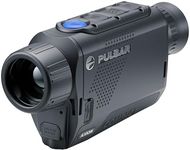
Choosing the right thermal camera starts with knowing what you'll use it for—whether it's home inspections, electrical work, outdoor adventures, or security. Thermal cameras detect heat instead of visible light, so they can reveal temperature differences and patterns that aren't visible to the naked eye. To get the best fit, you'll want to understand what features matter most for your needs so you don’t overpay or end up with a tool that falls short.ResolutionResolution in a thermal camera refers to the number of pixels in the thermal image, just like on a regular camera. Higher resolution means more detailed images and a better ability to spot smaller temperature differences or view finer details in what you're scanning. Entry-level models have lower resolution, which can make images look blocky—these are usually fine for simple tasks like household insulation checks or basic troubleshooting. Mid-range cameras offer more detail, which is useful if you're dealing with electrical panels or mechanical inspections where tiny hot spots matter. High-resolution thermal cameras are designed for professional use, such as building assessments or scientific work, where accuracy and fine detail are critical. So, pick the resolution based on how much detail you need in your images—casual use versus specialized, professional tasks.
Temperature RangeA camera’s temperature range is the span of temperatures it can detect and display accurately. This matters because it determines whether a thermal camera can handle the environments you want to use it in. For example, basic cameras will handle most household tasks but may not cope well with extremely hot equipment or freezing environments. Cameras with wider temperature ranges are better for industrial or firefighting applications, where temperatures can get very high or low. Consider the hottest and coldest surfaces you expect to measure, and ensure your chosen camera is suited for those extremes.
Sensitivity (NETD)Thermal sensitivity, often called NETD (Noise Equivalent Temperature Difference), measures the camera’s ability to notice very small temperature variations. A lower NETD value means the camera can see tinier differences, resulting in clearer and more accurate images, especially in environments with slight temperature contrast. For home or general DIY use, a higher NETD is usually okay. For things like electrical inspections, leak detection, or where you’re looking for subtle temperature changes, choose a model with greater sensitivity (lower NETD).
Field of ViewField of view describes how wide an area the camera can see at once. A wider field of view lets you scan larger spaces more quickly and is helpful for inspecting rooms or surveying outdoor areas. A narrow field of view lets you focus in on distant or small targets with more detail but covers less space at a time. If you’ll be scanning large walls, rooms, or open areas, a wide field of view is ideal. For pinpointing specific objects or inspecting items from further away, a narrower field works better. Match this to your most common use-case.
Image Storage and ConnectivityThermal cameras might save images onboard, share them wirelessly, or connect to other devices through USB or apps. If you plan to document your work or share findings, look for a model that suits the way you want to transfer or store images. Built-in storage or SD cards are handy for professionals who need to keep records, while Bluetooth or Wi-Fi connectivity is great if you prefer sending images straight to your phone or computer. Think about how you want to use and share your results, and pick a camera that supports those features.
Display Type and SizeThe display on a thermal camera is where you'll see the thermal image in real time. A larger and clearer screen makes it easier to spot details and interpret the images, which is useful if you're working in different lighting conditions or sharing the view with others. Some cameras link to smartphones for viewing, while others have a built-in screen. For solo or on-the-go inspections, a bigger and brighter in-built display is convenient. For team settings or detailed analysis, external or app-based displays might offer a better experience.