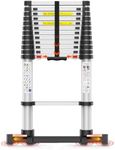
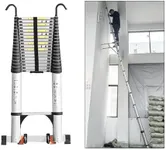
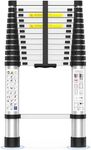
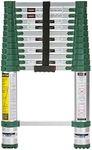
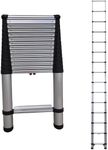
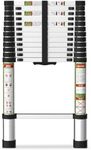
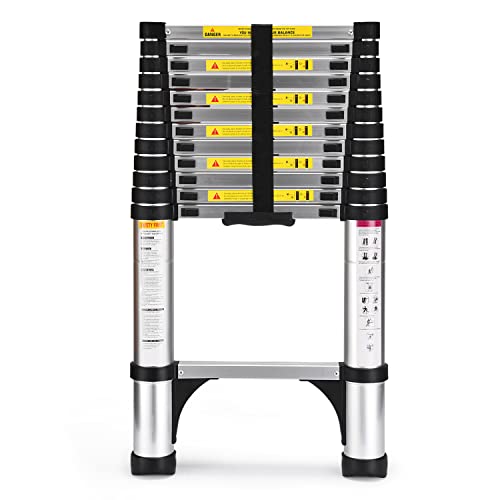
Buying Guide for the Best Telescoping Ladders
Choosing the right telescoping ladder can make a big difference in terms of safety, convenience, and efficiency. Telescoping ladders are versatile tools that can be extended to various lengths, making them ideal for a range of tasks from home maintenance to professional use. When selecting a telescoping ladder, it's important to consider several key specifications to ensure you get the best fit for your needs.Maximum HeightThe maximum height of a telescoping ladder is the full length it can extend to. This is important because it determines how high you can reach when using the ladder. If you need to reach high places like the roof of a house or tall trees, you will need a ladder with a greater maximum height. For general household tasks, a ladder with a moderate height may suffice. Typically, ladders range from 8 to 16 feet. Choose a height based on the highest point you need to reach regularly.
Weight CapacityWeight capacity refers to the maximum load the ladder can safely support, including the user and any tools or materials being carried. This is crucial for safety reasons. Ladders usually have weight ratings such as 250 lbs, 300 lbs, etc. If you plan to carry heavy tools or if multiple people will use the ladder, opt for a higher weight capacity. Always ensure the ladder can support your weight plus any additional load you might carry.
MaterialTelescoping ladders are typically made from aluminum or fiberglass. Aluminum ladders are lightweight and resistant to rust, making them easy to carry and durable. Fiberglass ladders are heavier but offer better electrical resistance, which is important if you are working near power lines. Choose aluminum for general use and portability, and fiberglass if you need extra safety around electrical hazards.
PortabilityPortability refers to how easy it is to transport and store the ladder. Telescoping ladders are designed to be compact when not in use, but their weight and collapsed size can vary. If you need to move the ladder frequently or have limited storage space, look for a model that is lightweight and has a small collapsed size. Portability is especially important for professionals who need to carry the ladder to different job sites.
Safety FeaturesSafety features on telescoping ladders can include locking mechanisms, non-slip feet, and stabilizer bars. These features are important to prevent accidents and ensure stability while using the ladder. Locking mechanisms keep the ladder securely in place at the desired height, non-slip feet prevent the ladder from sliding, and stabilizer bars provide additional support. Prioritize ladders with robust safety features, especially if you will be using the ladder on uneven or slippery surfaces.
Ease of UseEase of use encompasses how simple it is to extend, retract, and adjust the ladder. Some ladders have one-touch release mechanisms or ergonomic designs that make them easier to handle. If you will be using the ladder frequently, look for features that enhance ease of use to save time and effort. Consider how quickly and smoothly you can set up and take down the ladder, as this can impact your overall experience.