We Use CookiesWe use cookies to enhance the security, performance, functionality and for analytical and promotional activities. By continuing to browse this site you are agreeing to our privacy policy

Best Telescopes For Viewing Planets

From leading brands and best sellers available on the web.
#1

Winner

Gskyer Telescope 600x90mm AZ Astron

Gskyer

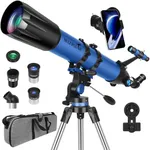
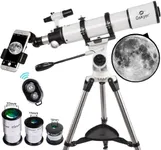
Gskyer Telescope 600x90mm AZ Astronomical Refractor Telescope for Adults Astronomy, German Technology Scope

View on Amazon
#2
Gskyer Telescope, 70mm Aperture 400

Gskyer

25%OFF

editor-choice-ribbon

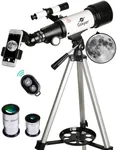
Gskyer Telescope, 70mm Aperture 400mm AZ Mount Astronomical Refracting Telescope for Kids Beginners - Travel Telescope with Carry Bag, Phone Adapter and Wireless Remote.
View on Amazon
#3
Celestron Sky Watcher Sky-Watcher E

Sky-Watcher

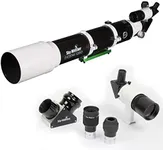
Celestron Sky Watcher Sky-Watcher EvoStar 120 APO Doublet Refractor – Compact and Portable Optical Tube for Affordable Astrophotography and Visual Astronomy
View on Amazon
#4
Celestron StarSense Explorer DX 102

Celestron

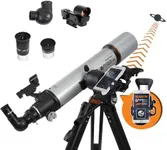
Celestron StarSense Explorer DX 102AZ App-Enabled Telescope – 102mm Refractor with Smartphone Dock & StarSense App – iPhone & Android Compatible – Easy-to-Use for Beginners
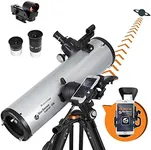
View on Amazon
#5
Celestron StarSense Explorer DX 130

Celestron

14%OFF

Celestron StarSense Explorer DX 130AZ App-Enabled Telescope – 130mm Newtonian Reflector with Smartphone Dock & StarSense App – iPhone & Android Compatible – Easy-to-Use for Beginners

View on Amazon
#6
Celestron StarSense Explorer 8-inch

Celestron

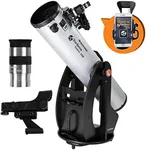
Celestron StarSense Explorer 8-inch App-Enabled Telescope – 203mm Dobsonian with Smartphone Dock & StarSense App – iPhone & Android Compatible – Easy-to-Use for Beginners
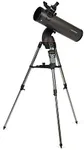
View on Amazon
#7
Celestron - NexStar 130SLT Computer

Celestron

Celestron - NexStar 130SLT Computerized Telescope - Compact and Portable - Newtonian Reflector Optical Design - SkyAlign Technology - Computerized Hand Control - 130mm Aperture Grey
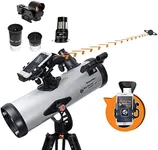
View on Amazon
#8
Celestron StarSense Explorer LT 114

Celestron

27%OFF

Celestron StarSense Explorer LT 114AZ App-Enabled Telescope – 114mm Newtonian Reflector with Smartphone Dock & StarSense App – iPhone & Android Compatible – Easy-to-Use for Beginners
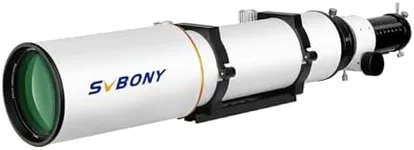
View on Amazon
#9
SVBONY SV503 Refractor Telescope, 1

SVBONY

24%OFF

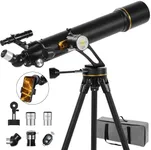
SVBONY SV503 Refractor Telescope, 102mm F7 Extra Low Dispersion Achromatic Refractor OTA, Dual-Speed Focuser, 90mm Focus Travel,Telescope for Adults High Powered, for Deep Sky Planets Astrophotography
View on Amazon
#10
Koolpte Telescope, 90mm Aperture 70

Koolpte

40%OFF

editor-choice-ribbon

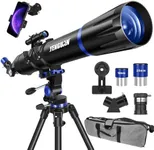
Koolpte Telescope, 90mm Aperture 700mm with Vertisteel AZ Mounting Slow-Motion Mount, High Power for Astronomy Enthusiasts, Easy for Kids, with Carry Bag, Wireless Remote Control, Phone Adapter,Black

View on Amazon
How do we rank products for you?

Our technology thoroughly searches through the online shopping world, reviewing hundreds of sites. We then process and analyze this information, updating in real-time to bring you the latest top-rated products. This way, you always get the best and most current options available.

headphones-stars

Most Popular Categories Right Now

Buying Guide for the Best Telescopes For Viewing Planets

Choosing the right telescope for viewing planets can be a rewarding experience, but it requires some understanding of the key specifications that will impact your viewing experience. The right telescope will allow you to see the planets in our solar system with clarity and detail. Here are the key specifications you should consider when selecting a telescope for planetary observation, along with explanations to help you make an informed decision.
ApertureThe aperture of a telescope is the diameter of its main optical component (the lens or mirror). This spec is crucial because it determines how much light the telescope can gather. A larger aperture allows you to see more detail and fainter objects. For planetary viewing, an aperture of at least 70mm (2.8 inches) is recommended, but larger apertures (100mm or more) will provide better resolution and more detailed views of planets. If you are primarily interested in viewing planets, aim for a telescope with an aperture that balances portability and performance.
Focal LengthThe focal length of a telescope is the distance from the lens or mirror to the point where the telescope forms an image. This spec affects the magnification and field of view. A longer focal length provides higher magnification, which is beneficial for viewing planets. Telescopes with focal lengths of 1000mm or more are ideal for planetary observation. However, if you want a wider field of view for other types of astronomy, a shorter focal length might be more versatile. Consider your primary use when choosing the focal length.
MagnificationMagnification is determined by the combination of the telescope's focal length and the eyepiece used. While high magnification can bring planets closer, it can also make the image less sharp if the telescope's aperture is not large enough. For planetary viewing, a magnification of 100x to 200x is typically sufficient. Remember that the maximum useful magnification is about 50 times the aperture in inches (or 2 times the aperture in millimeters). Choose a telescope that allows you to achieve this range of magnification with the eyepieces provided or available.
Mount TypeThe mount is the part of the telescope that supports it and allows it to move. There are two main types: altazimuth and equatorial. An altazimuth mount moves up-down and left-right, which is simpler to use and good for beginners. An equatorial mount is aligned with the Earth's axis and is better for tracking planets as they move across the sky. For planetary viewing, an equatorial mount is often preferred because it makes it easier to follow the planets' motion. Choose a mount that matches your comfort level and observing needs.
Optical QualityOptical quality refers to the precision and clarity of the telescope's lenses or mirrors. High-quality optics will provide sharper and more detailed images. Look for telescopes with fully multi-coated optics, which reduce reflections and increase light transmission. This is especially important for viewing planets, where fine details matter. Research user reviews and expert opinions to gauge the optical quality of a telescope before purchasing.
PortabilityPortability is an important consideration if you plan to transport your telescope to different viewing locations. Smaller, lighter telescopes are easier to carry and set up, but they may have smaller apertures and lower magnification. If you have a dedicated observing spot at home, a larger, less portable telescope might be a better choice. Consider how and where you will use the telescope most often when evaluating portability.