Buying Guide for the Best Table Saw
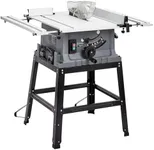
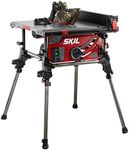
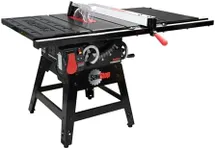
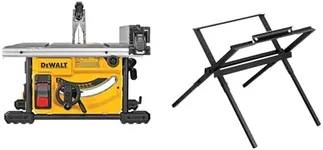
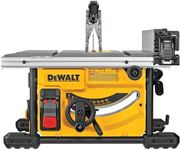
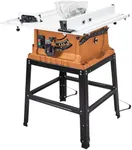
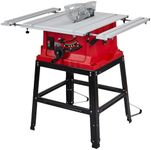
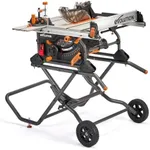
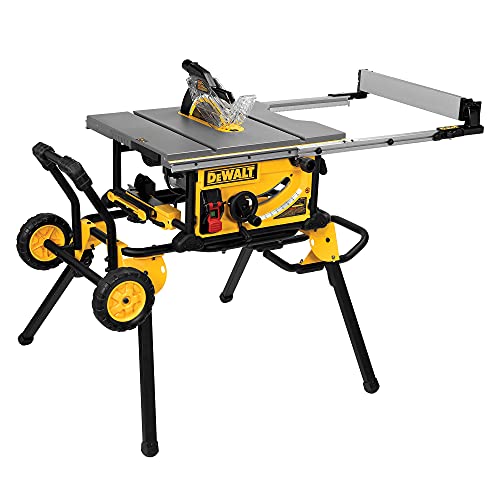
Choosing the right table saw can be a game-changer for your woodworking projects. Whether you're a professional carpenter or a DIY enthusiast, the right table saw can make your work more efficient, accurate, and enjoyable. To find the best fit for you, it's important to understand the key specifications and how they align with your needs. Here are the main specs to consider when selecting a table saw and how to navigate them.Type of Table SawTable saws come in different types: benchtop, contractor, cabinet, and hybrid. Benchtop saws are portable and ideal for light-duty tasks, making them great for hobbyists or small projects. Contractor saws are larger and more powerful, suitable for medium-duty tasks and semi-professional use. Cabinet saws are heavy-duty, offering the highest precision and power, perfect for professional woodworkers. Hybrid saws combine features of contractor and cabinet saws, providing a balance of power and portability. Choose based on the scale and frequency of your projects.
Motor PowerMotor power, measured in horsepower (HP) or amps, determines the cutting capability of the saw. Lower power (1-2 HP) is sufficient for light-duty tasks and softwoods. Medium power (2-3 HP) is suitable for harder woods and more frequent use. High power (3+ HP) is necessary for heavy-duty tasks, thick hardwoods, and professional use. Consider the types of materials you'll be cutting and the intensity of your work to choose the right motor power.
Blade SizeThe blade size, typically 10 or 12 inches, affects the depth of cut. A 10-inch blade is standard and sufficient for most tasks, offering a maximum cut depth of around 3.5 inches. A 12-inch blade provides a deeper cut, up to 4 inches, and is useful for larger, thicker materials. Choose a blade size based on the thickness of the materials you plan to work with.
Rip CapacityRip capacity refers to the maximum width of material that can be cut. Smaller rip capacities (20-30 inches) are adequate for narrow boards and smaller projects. Medium rip capacities (30-50 inches) are versatile for a range of tasks. Larger rip capacities (50+ inches) are necessary for cutting wide sheets of plywood or large boards. Consider the size of the materials you'll be working with to determine the rip capacity you need.
Fence SystemThe fence system ensures straight, accurate cuts. A good fence should be sturdy, easy to adjust, and lock securely in place. Look for features like micro-adjustments for fine-tuning and T-square designs for better alignment. If precision is crucial for your projects, invest in a high-quality fence system.
Dust CollectionDust collection is important for maintaining a clean workspace and protecting your health. Basic models may have minimal dust collection, suitable for occasional use. More advanced models offer better dust ports and compatibility with shop vacuums or dust extractors, ideal for frequent use and professional environments. Consider how much dust your projects generate and your need for a clean workspace.
Safety FeaturesSafety features like blade guards, riving knives, anti-kickback pawls, and flesh-sensing technology are crucial. Basic models may have minimal safety features, suitable for experienced users. More advanced models offer comprehensive safety systems, ideal for beginners or those prioritizing safety. Assess your comfort level and the importance of safety in your workspace.