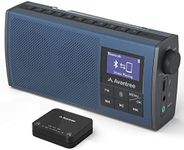
Buying Guide for the Best Soundbar With Fm Radio
Choosing the right soundbar with FM radio can significantly enhance your audio experience, whether you're watching TV, listening to music, or tuning into your favorite radio stations. To make an informed decision, it's important to understand the key specifications and how they align with your needs. Here are the main factors to consider when selecting a soundbar with FM radio.Sound QualitySound quality is crucial because it determines how clear and immersive the audio will be. Look for soundbars with a good frequency range, typically between 20Hz to 20kHz, which covers the full spectrum of human hearing. If you enjoy deep bass, consider a soundbar with a built-in subwoofer or one that supports external subwoofers. For a more cinematic experience, look for soundbars with surround sound capabilities or Dolby Atmos support. Your choice should depend on whether you prioritize music, movies, or general TV watching.
FM Radio ReceptionFM radio reception is important if you plan to use the soundbar to listen to radio stations. A soundbar with a built-in FM tuner will allow you to access radio channels directly. Check the specifications for the FM frequency range, which is usually between 87.5 MHz to 108 MHz. Additionally, consider the antenna type and its placement options, as a good antenna can significantly improve reception quality. If you live in an area with strong radio signals, a basic FM tuner will suffice, but in areas with weaker signals, look for soundbars with advanced reception features.
Connectivity OptionsConnectivity options determine how you can connect the soundbar to other devices. Common connections include HDMI ARC, optical input, Bluetooth, and AUX. HDMI ARC is ideal for connecting to your TV, as it allows for high-quality audio and easy control with your TV remote. Optical input is another good option for high-quality audio. Bluetooth connectivity is essential if you want to stream music wirelessly from your phone or tablet. AUX input is useful for connecting older devices. Choose a soundbar with the connectivity options that match your existing devices and how you plan to use it.
Size and DesignThe size and design of the soundbar can affect both its performance and how well it fits into your space. Soundbars come in various lengths, typically ranging from 20 inches to 50 inches or more. A longer soundbar can provide better stereo separation and a more immersive experience, but it should match the width of your TV for aesthetic balance. Consider the height and depth as well, especially if you plan to place it in front of your TV or mount it on the wall. The design should complement your room's decor and fit comfortably in your intended space.
Ease of UseEase of use is important for a hassle-free experience. Look for soundbars with user-friendly interfaces, clear displays, and intuitive remote controls. Some soundbars come with companion apps that allow you to control settings and stream music from your smartphone. Voice control features, such as compatibility with Alexa or Google Assistant, can also enhance convenience. If you prefer a straightforward setup and operation, choose a soundbar with simple controls and clear instructions.
Additional FeaturesAdditional features can enhance the functionality and versatility of your soundbar. Some soundbars offer built-in smart assistants, multi-room audio capabilities, or integration with home automation systems. Others may include features like sound modes for different types of content (e.g., movies, music, news), night mode for reduced volume during late hours, or dialogue enhancement for clearer speech. Consider which additional features are important to you based on how you plan to use the soundbar and your personal preferences.