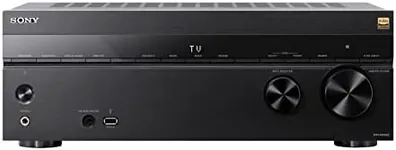
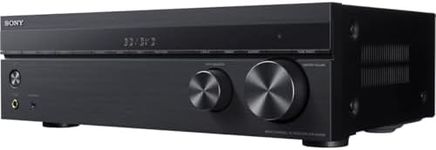
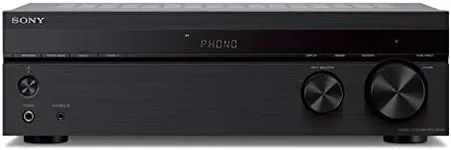
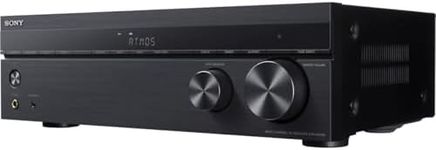
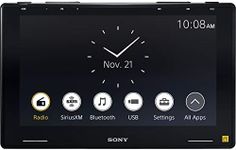
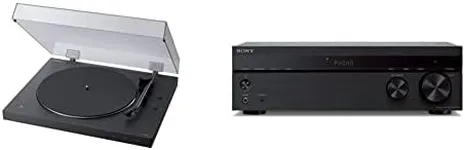
Buying Guide for the Best Sony Receivers
When choosing a Sony receiver, it's important to consider your specific needs and preferences to ensure you get the best fit for your home audio system. A receiver is the central hub of your home theater or audio setup, so selecting the right one can greatly enhance your listening experience. Here are some key specifications to consider and how to navigate them to find the perfect receiver for you.ChannelsChannels refer to the number of speakers the receiver can support. This is important because it determines the surround sound experience you can achieve. Common configurations include 5.1, 7.1, and 9.2 channels. A 5.1 channel system supports five speakers and one subwoofer, which is suitable for most standard home theater setups. A 7.1 channel system adds two additional speakers for a more immersive experience, while a 9.2 channel system includes even more speakers and two subwoofers for the ultimate surround sound. Choose the number of channels based on the size of your room and your desired audio experience.
Power OutputPower output, measured in watts per channel, indicates how much power the receiver can deliver to each speaker. This is important for determining the loudness and clarity of the sound. Receivers with higher wattage can drive larger speakers and fill bigger rooms with sound. For small to medium-sized rooms, a receiver with 50-100 watts per channel is usually sufficient. For larger rooms or if you prefer very loud audio, look for a receiver with 100 watts per channel or more. Consider your room size and listening habits when choosing the power output.
ConnectivityConnectivity options determine how you can connect your devices to the receiver. This includes HDMI inputs and outputs, optical and coaxial digital inputs, and analog inputs. HDMI inputs are crucial for connecting modern devices like Blu-ray players, gaming consoles, and streaming devices. Look for a receiver with multiple HDMI inputs if you have several devices to connect. Additionally, consider wireless connectivity options like Bluetooth and Wi-Fi for streaming music from your phone or other devices. Choose a receiver with the connectivity options that match your current and future devices.
Audio FormatsSupport for various audio formats ensures that the receiver can decode and play different types of audio content. Important formats include Dolby Atmos, DTS:X, and Dolby TrueHD. Dolby Atmos and DTS:X provide immersive 3D sound, which is great for a high-end home theater experience. Dolby TrueHD offers high-definition audio for a more detailed sound. If you want the latest and most immersive audio experience, look for a receiver that supports these formats. If you mainly listen to music or watch standard TV shows, basic format support may be sufficient.
Room CalibrationRoom calibration technology helps optimize the sound quality based on the acoustics of your room. This is important because it ensures that you get the best possible audio experience regardless of your room's shape and size. Many Sony receivers come with built-in calibration systems that use a microphone to measure and adjust the sound. If you want hassle-free setup and optimal sound, choose a receiver with automatic room calibration. If you prefer to manually adjust settings, this feature may be less important.
User InterfaceThe user interface includes the on-screen display and remote control, which are important for ease of use. A clear and intuitive interface makes it easier to navigate settings and inputs. Look for a receiver with a user-friendly interface, especially if you are not very tech-savvy. Some receivers also offer smartphone apps for control, which can be convenient. Consider how comfortable you are with technology and choose a receiver with an interface that suits your preferences.