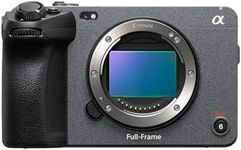
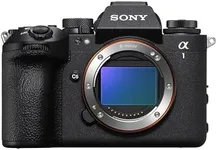
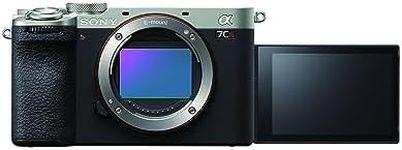
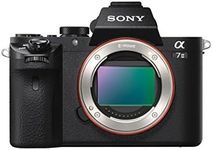
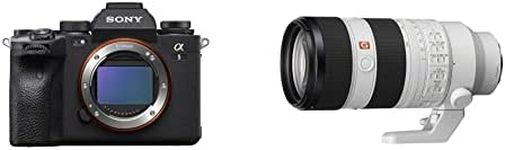
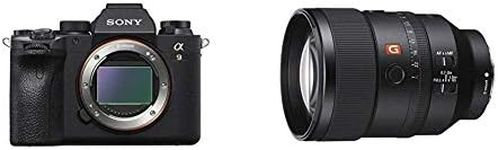
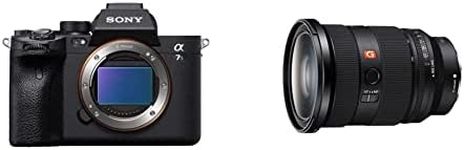
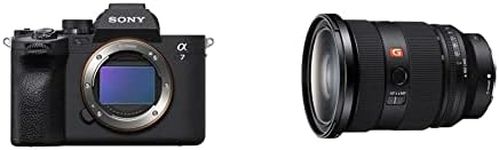
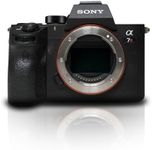
Buying Guide for the Best Sony Alpha Full Frame
When choosing a Sony Alpha full-frame camera, it's important to consider your specific needs and how you plan to use the camera. Full-frame cameras are known for their superior image quality, low-light performance, and depth of field control. However, they come with a variety of features and specifications that can be overwhelming. Understanding these key specs will help you make an informed decision and find the best fit for your photography or videography needs.Sensor ResolutionSensor resolution, measured in megapixels (MP), determines the amount of detail a camera can capture. Higher resolution sensors can produce larger prints and allow for more cropping without losing image quality. For general photography, a resolution of around 24MP is often sufficient. If you plan to do a lot of large prints or detailed cropping, you might want to consider a higher resolution sensor, such as 42MP or more. However, higher resolution sensors can also produce larger file sizes, which require more storage space and processing power.
ISO RangeThe ISO range of a camera indicates its sensitivity to light. A wider ISO range allows for better performance in low-light conditions. For most users, an ISO range of 100-32000 is adequate, providing good flexibility for various lighting situations. If you frequently shoot in very low light or need to capture fast-moving subjects in dim conditions, look for a camera with an extended ISO range, such as up to 102400 or higher. Keep in mind that higher ISO settings can introduce more noise into your images.
Autofocus SystemThe autofocus (AF) system is crucial for capturing sharp images, especially in fast-paced or dynamic environments. Sony Alpha full-frame cameras often feature advanced AF systems with numerous focus points and fast tracking capabilities. For general use, a camera with a reliable AF system and around 300-400 focus points should suffice. If you are into sports, wildlife, or action photography, consider a model with a more sophisticated AF system, offering over 500 focus points and advanced tracking features.
Continuous Shooting SpeedContinuous shooting speed, measured in frames per second (fps), is important for capturing fast-moving subjects. A higher fps rate allows you to take more shots in a short period, increasing your chances of getting the perfect shot. For casual photography, a continuous shooting speed of 5-10 fps is usually enough. However, if you are into sports or wildlife photography, you might want a camera that offers 10 fps or higher to ensure you don't miss any critical moments.
Video CapabilitiesIf you plan to use your camera for videography, consider its video capabilities. Look for features like 4K resolution, high frame rates (such as 60fps or 120fps for slow-motion), and advanced video codecs. For casual video recording, 4K at 30fps is typically sufficient. If you are a professional videographer or plan to do a lot of video work, you might want a camera that offers 4K at 60fps or higher, along with additional features like S-Log profiles for better color grading in post-production.
Build Quality and Weather SealingBuild quality and weather sealing are important if you plan to use your camera in challenging environments. A well-built camera with weather sealing can withstand dust, moisture, and minor impacts, making it more durable and reliable. For general use, a camera with a solid build and basic weather sealing should be adequate. If you frequently shoot in harsh conditions, such as rain, snow, or dusty environments, look for a model with more robust weather sealing and a magnesium alloy body for added durability.
Battery LifeBattery life is a crucial factor, especially if you plan to shoot for extended periods without access to charging. Full-frame cameras tend to consume more power, so having a camera with a long battery life is beneficial. For casual use, a battery life of around 400-600 shots per charge is usually sufficient. If you are a professional or plan to shoot extensively, consider a camera with a battery life of 700 shots or more, or invest in additional batteries and a battery grip for extended shooting sessions.
Connectivity OptionsConnectivity options, such as Wi-Fi, Bluetooth, and NFC, allow you to easily transfer images and control your camera remotely. These features can be very convenient for sharing photos on the go or using your smartphone as a remote control. For most users, basic Wi-Fi and Bluetooth connectivity will be sufficient. If you require more advanced features, such as tethered shooting or faster file transfers, look for a camera with more comprehensive connectivity options, including USB-C and Ethernet ports.