Buying Guide for the Best Solder For Stained Glass
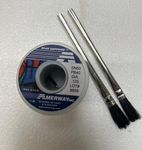
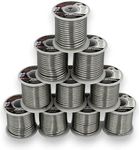
Choosing the right solder for stained glass projects is crucial for achieving strong, durable, and aesthetically pleasing results. Solder is the material used to join pieces of stained glass together, and its quality and characteristics can significantly impact the final outcome of your work. When selecting solder, consider factors such as melting point, composition, and ease of use. Understanding these key specifications will help you make an informed decision that aligns with your project needs and skill level.CompositionSolder for stained glass typically comes in two main compositions: 60/40 and 50/50. The numbers refer to the ratio of tin to lead in the solder. 60/40 solder contains 60% tin and 40% lead, while 50/50 solder contains equal parts tin and lead. The higher tin content in 60/40 solder makes it easier to work with and provides a smoother finish, which is ideal for detailed and intricate designs. 50/50 solder is more economical and can be used for larger, less detailed projects. Choose 60/40 solder for finer work and 50/50 for more straightforward, larger pieces.
Melting PointThe melting point of solder is the temperature at which it becomes liquid and can be used to join glass pieces. Solder with a lower melting point (around 361°F for 60/40) is easier to work with, especially for beginners, as it requires less heat and reduces the risk of damaging the glass. Solder with a higher melting point (around 421°F for 50/50) is more suitable for experienced users who need stronger joints for larger or more complex projects. Consider your skill level and the complexity of your project when choosing the melting point of your solder.
Ease of UseEase of use refers to how manageable the solder is during the stained glass assembly process. Solder with a higher tin content (like 60/40) flows more smoothly and is easier to control, making it ideal for beginners and detailed work. It also tends to produce cleaner, more aesthetically pleasing joints. Solder with a higher lead content (like 50/50) can be more challenging to work with but is often preferred for larger projects due to its strength. If you are new to stained glass or working on intricate designs, opt for solder that is known for its ease of use.
StrengthThe strength of solder is important for ensuring that your stained glass pieces stay securely joined over time. Solder with a higher lead content (like 50/50) generally provides stronger joints, making it suitable for larger or more structural projects. However, 60/40 solder, while slightly less strong, is often sufficient for most stained glass applications and offers the added benefit of easier handling and a smoother finish. Assess the size and structural requirements of your project to determine the necessary strength of your solder.
FinishThe finish of the solder refers to the appearance of the joints once the solder has cooled and solidified. Solder with a higher tin content (like 60/40) typically results in a shinier, smoother finish, which is desirable for decorative stained glass pieces. Solder with a higher lead content (like 50/50) may have a duller finish but can be polished to improve its appearance. If the visual appeal of the joints is important for your project, choose solder that provides a high-quality finish, such as 60/40.


![[2025 Upgraded] BlueStars 200PCS Yellow Solder Seal Wire Connectors 12-10 AWG, Waterproof Heat Shrink Butt Connectors for Automotive Marine Boat Motorcycle Outdoor Wire Splice](https://images-proxy.bestreviews.guide/azXCqsNuWbp2J3iNfybZqGYe_y4=/0x150/https://m.media-amazon.com/images/I/41WBP-ZwBXL._AC_CX679_.jpg)