Buying Guide for the Best Soil Thermometer
Choosing the right soil thermometer is essential for anyone involved in gardening, farming, or any activity that requires precise soil temperature measurements. A soil thermometer helps you understand the temperature of the soil, which is crucial for seed germination, plant growth, and overall soil health. When selecting a soil thermometer, consider the following key specifications to ensure you get the best fit for your needs.Temperature RangeThe temperature range of a soil thermometer indicates the minimum and maximum temperatures it can measure. This spec is important because different plants and seeds require specific temperature ranges for optimal growth. Soil thermometers typically range from -20°C to 100°C. If you are working in colder climates or with plants that need cooler soil, ensure the thermometer can measure lower temperatures. Conversely, for warmer climates or plants that thrive in heat, a higher maximum temperature is necessary.
AccuracyAccuracy refers to how close the thermometer's readings are to the actual soil temperature. This is crucial for making informed decisions about planting and soil management. Accuracy is usually expressed in degrees, such as ±1°C. Higher accuracy is better, especially for sensitive plants that require precise temperature conditions. If your gardening or farming activities demand exact temperature readings, opt for a thermometer with higher accuracy.
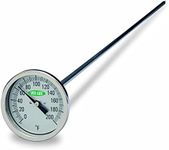
Probe LengthThe probe length determines how deep the thermometer can measure the soil temperature. This is important because different plants have roots at varying depths, and soil temperature can vary significantly at different levels. Probe lengths typically range from 4 inches to 12 inches. For shallow-rooted plants, a shorter probe is sufficient, while deeper-rooted plants require a longer probe to get accurate readings at the root level.
MaterialThe material of the soil thermometer affects its durability and suitability for different soil types. Common materials include stainless steel and plastic. Stainless steel is more durable and resistant to corrosion, making it ideal for frequent use and harsh soil conditions. Plastic thermometers are lighter and may be more suitable for casual gardening. Choose a material that matches the intensity and frequency of your soil temperature measurements.
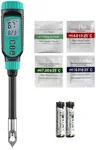
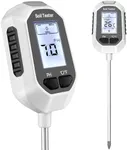
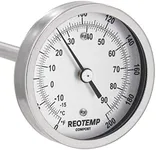
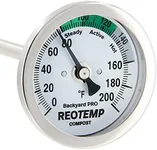
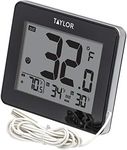
Display TypeThe display type indicates how the temperature readings are shown. Soil thermometers can have analog or digital displays. Analog displays are simple and often more durable, while digital displays provide more precise readings and may include additional features like backlighting for easy reading in low light conditions. If you prefer straightforward, easy-to-read measurements, a digital display might be more suitable. For those who value simplicity and durability, an analog display is a good choice.
Water ResistanceWater resistance is a measure of how well the thermometer can withstand moisture and wet conditions. This is important for outdoor use where the thermometer may be exposed to rain or irrigation. Water-resistant thermometers are designed to function accurately even when wet, ensuring reliable readings in all weather conditions. If you plan to use the thermometer in a garden or farm where it might get wet, opt for a water-resistant model.