Buying Guide for the Best Small Food Processor
Choosing the right small food processor can make your kitchen tasks much easier and more efficient. A small food processor is perfect for chopping, slicing, dicing, and pureeing small quantities of food. When selecting a small food processor, it's important to consider several key specifications to ensure it meets your needs. Here are the key specs to look out for and how to choose the best one for you.CapacityCapacity refers to the volume of food the processor can handle at one time, usually measured in cups. This is important because it determines how much food you can process in one go. Small food processors typically range from 1 to 4 cups. If you usually prepare small quantities of food, a 1-2 cup capacity might be sufficient. For slightly larger batches, a 3-4 cup capacity would be more appropriate. Consider your typical food preparation needs to choose the right capacity.
PowerPower is measured in watts and indicates the strength of the motor. This is important because a more powerful motor can handle tougher tasks like chopping nuts or hard vegetables more efficiently. Small food processors usually range from 200 to 400 watts. For basic tasks like chopping herbs or making small batches of sauce, a lower wattage (200-300 watts) is sufficient. For more demanding tasks, look for a processor with higher wattage (300-400 watts). Think about the types of food you will be processing to determine the right power level.
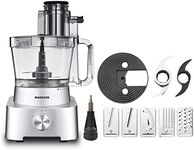
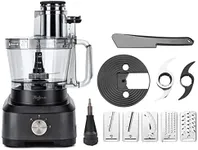
Blades and AttachmentsBlades and attachments determine the versatility of the food processor. This is important because different blades and attachments allow you to perform various tasks like slicing, shredding, and pureeing. Some small food processors come with multiple blades and discs, while others have a single multi-purpose blade. If you need a processor for a variety of tasks, look for one with multiple attachments. If your needs are simpler, a basic model with a single blade may suffice. Consider what tasks you will be performing most often to choose the right set of blades and attachments.
Ease of CleaningEase of cleaning refers to how simple it is to clean the food processor after use. This is important because a processor that is difficult to clean can be a hassle and may discourage you from using it. Look for models with dishwasher-safe parts and minimal crevices where food can get stuck. If you prefer hand washing, ensure the parts are easy to disassemble and clean. Consider your cleaning preferences and habits to choose a processor that will be easy to maintain.
Size and StorageSize and storage refer to the physical dimensions of the food processor and how easy it is to store. This is important because a compact processor is easier to store in a small kitchen. Small food processors are designed to take up less counter space and can often be stored in a cabinet or drawer. If you have limited kitchen space, look for a compact model. Consider where you will store the processor and how much space you have available to choose the right size.
Noise LevelNoise level refers to how loud the food processor is during operation. This is important because a noisy processor can be disruptive, especially in a small kitchen. Some models are designed to operate more quietly than others. If noise is a concern for you, look for reviews or specifications that mention a quieter operation. Consider your tolerance for noise and the environment in which you will be using the processor to choose a model with an acceptable noise level.