Buying Guide for the Best Self Threading Serger
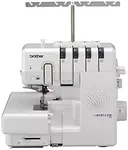
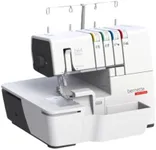
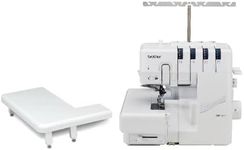
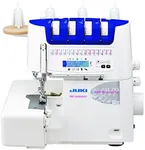
Choosing the right self-threading serger can significantly enhance your sewing projects by providing professional finishes and saving you time. A self-threading serger is a specialized sewing machine that trims the fabric edge and encloses it with an overlock stitch, all in one step. The self-threading feature simplifies the threading process, making it more user-friendly, especially for beginners. When selecting a self-threading serger, consider the following key specifications to ensure you pick the best fit for your needs.Number of ThreadsThe number of threads a serger can use is crucial because it determines the types of stitches you can create. Sergers typically range from 2-thread to 5-thread models. A 2-thread serger is suitable for lightweight fabrics and basic overlocking. A 3-thread serger is versatile for most general sewing needs, providing a strong seam and edge finish. A 4-thread serger offers additional strength and is ideal for knit fabrics. A 5-thread serger combines a 2-thread chain stitch with a 3-thread overlock, providing a durable seam for heavy fabrics. Choose based on the types of fabrics and projects you plan to work on.
Differential FeedDifferential feed is a feature that allows you to adjust the feed dogs to move the fabric at different rates. This is important for preventing stretching or puckering in your fabric, especially when working with knits or stretchy materials. Differential feed settings typically range from 0.7 to 2.0. A lower setting (closer to 0.7) is used to stretch the fabric, while a higher setting (closer to 2.0) is used to gather the fabric. If you work with a variety of fabrics, a serger with adjustable differential feed will give you more control and better results.
Stitch OptionsThe variety of stitch options available on a serger can greatly expand your creative possibilities. Common stitches include the 3-thread overlock, 4-thread overlock, rolled hem, flatlock, and cover stitch. More advanced models may offer additional decorative stitches. If you primarily need basic overlocking, a serger with fewer stitch options may suffice. However, if you enjoy experimenting with different finishes and decorative techniques, look for a serger with a wide range of stitch options to suit your creative needs.
Ease of ThreadingOne of the main advantages of a self-threading serger is the ease of threading. This feature can save you a lot of time and frustration, especially if you frequently change thread colors. Look for a serger with an automatic or air threading system, which uses a burst of air to push the thread through the loopers. This is particularly helpful for beginners or those with limited dexterity. Ensure the serger you choose has a straightforward threading process to make your sewing experience more enjoyable.
SpeedThe speed of a serger is measured in stitches per minute (SPM) and affects how quickly you can complete your projects. Most sergers range from 1,300 to 1,700 SPM. Higher speeds are beneficial for large projects or professional use, allowing you to finish seams quickly. However, if you are a beginner or prefer more control, a serger with adjustable speed settings might be more suitable. Consider your sewing habits and the types of projects you undertake when choosing the appropriate speed for your serger.
Adjustable TensionTension control is essential for achieving balanced stitches and preventing thread breakage. Adjustable tension allows you to fine-tune the tightness of the threads to match different fabric types and thicknesses. Some sergers have manual tension dials, while others offer automatic tension settings. If you work with a variety of fabrics, having the ability to adjust the tension manually can provide better results. For those who prefer simplicity, automatic tension settings can be a convenient feature.