Buying Guide for the Best Self Propelled Snow Blower
Choosing the right self-propelled snow blower can make a significant difference in how efficiently and comfortably you can clear snow from your property. When selecting a snow blower, it's important to consider various specifications that will determine its performance, ease of use, and suitability for your specific needs. Understanding these key specs will help you make an informed decision and ensure you get the best fit for your requirements.Engine PowerEngine power, measured in horsepower (HP) or cubic centimeters (cc), determines the snow blower's ability to handle heavy and wet snow. Higher engine power means more capability to tackle tough snow conditions. For light to moderate snowfall, an engine with lower power (around 200-300cc) may suffice. For heavy snowfall or large areas, consider a more powerful engine (300cc and above). Your choice should be guided by the typical snow conditions in your area and the size of the area you need to clear.
Clearing WidthThe clearing width is the width of the path that the snow blower can clear in a single pass. This spec is important because it affects how quickly you can clear your driveway or walkway. Smaller clearing widths (20-24 inches) are suitable for narrow driveways and walkways, while larger widths (24-30 inches or more) are better for wide driveways and larger areas. Choose a clearing width that matches the size of the area you need to clear and the amount of time you want to spend on snow removal.
Clearing DepthClearing depth refers to the maximum height of snow that the snow blower can handle in one pass. This is crucial for areas that experience heavy snowfall. A clearing depth of 12-18 inches is typically sufficient for moderate snowfall, while areas with heavy snowfall may require a depth of 20 inches or more. Consider the average snowfall in your region to determine the appropriate clearing depth for your needs.
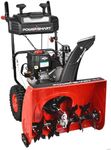
Drive SystemThe drive system of a self-propelled snow blower determines how it moves forward. There are typically two types: single-stage and two-stage. Single-stage snow blowers are lighter and easier to maneuver, making them suitable for light to moderate snowfall on paved surfaces. Two-stage snow blowers are more powerful and can handle heavier snow and rougher terrain, making them ideal for larger areas and unpaved surfaces. Choose a drive system based on the type of terrain and the amount of snow you need to clear.
Auger and ImpellerThe auger and impeller are components that work together to collect and throw snow. The auger breaks up the snow and feeds it into the impeller, which then throws it out of the chute. The size and material of these components affect the snow blower's performance. Steel augers and impellers are more durable and effective for heavy, wet snow, while plastic or rubber components are lighter and suitable for lighter snow. Consider the typical snow conditions in your area to choose the right materials for these components.
Chute ControlChute control allows you to direct where the snow is thrown. This feature is important for efficiently managing where the cleared snow ends up. Manual chute control requires you to adjust the chute by hand, while remote or joystick controls allow for easier adjustments from the operator's position. If you need to frequently change the direction of the snow discharge, a remote or joystick control can save time and effort. Choose a chute control system that matches your preference for convenience and ease of use.
Electric StartAn electric start feature allows you to start the snow blower with the push of a button, rather than pulling a recoil starter. This is especially useful in cold weather when engines can be harder to start. If you prefer convenience and ease of use, look for a snow blower with an electric start. This feature can be particularly beneficial for those who may have difficulty with manual starting methods.
Heated HandlesHeated handles provide warmth to your hands while operating the snow blower, making it more comfortable to use in cold weather. This feature is important for those who need to clear snow in very low temperatures. If you often find yourself working in freezing conditions, heated handles can make the task more pleasant and reduce the risk of cold-related discomfort.