Buying Guide for the Best Sand Blasters
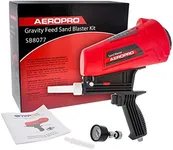
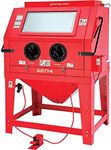
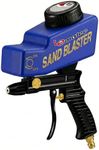
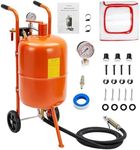
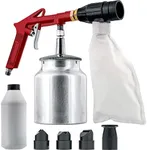
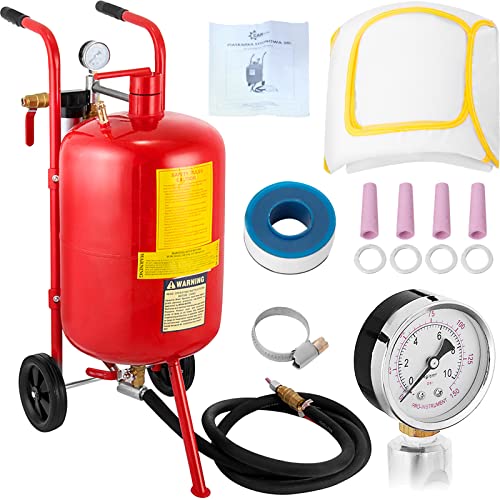
Choosing the right sandblaster can make a significant difference in the efficiency and quality of your work. Sandblasters are used for cleaning, smoothing, or etching surfaces by propelling abrasive materials at high speeds. To find the best sandblaster for your needs, you should consider several key specifications. Understanding these specs will help you make an informed decision and ensure that the sandblaster you choose is well-suited to your specific tasks.Type of SandblasterThere are three main types of sandblasters: gravity-fed, siphon, and pressure. Gravity-fed sandblasters use gravity to feed the abrasive material into the gun, making them simple and easy to use for small projects. Siphon sandblasters use a suction method to draw the abrasive material into the gun, suitable for medium-sized tasks. Pressure sandblasters use a pressurized tank to force the abrasive material out at high speeds, ideal for large and heavy-duty projects. Choose the type based on the scale and frequency of your work.
Abrasive Material CompatibilityDifferent sandblasters are compatible with various abrasive materials such as sand, glass beads, aluminum oxide, and more. The type of abrasive material you use can affect the finish and efficiency of your work. For example, glass beads are great for a smooth finish, while aluminum oxide is more aggressive for heavy-duty cleaning. Ensure the sandblaster you choose can handle the abrasive material you plan to use most frequently.
Air Pressure and CFM (Cubic Feet per Minute)Air pressure, measured in PSI (pounds per square inch), and CFM are crucial for the performance of a sandblaster. Higher PSI and CFM ratings mean more power and efficiency. For light tasks, a sandblaster with 50-90 PSI and 2-4 CFM might suffice. For medium tasks, look for 90-120 PSI and 4-6 CFM. For heavy-duty tasks, you may need 120+ PSI and 6+ CFM. Match the air pressure and CFM to the requirements of your projects to ensure optimal performance.
Nozzle Size and MaterialThe nozzle size and material can affect the precision and durability of the sandblaster. Smaller nozzles provide more precision for detailed work, while larger nozzles cover more area for faster completion of large tasks. Nozzles made from materials like ceramic, tungsten carbide, or boron carbide offer different levels of durability. Tungsten carbide and boron carbide nozzles are more durable and suitable for heavy use, while ceramic nozzles are more affordable and suitable for lighter tasks. Choose the nozzle size and material based on the type and frequency of your work.
Hopper CapacityThe hopper capacity determines how much abrasive material the sandblaster can hold at one time. Smaller hoppers (under 10 lbs) are suitable for small, occasional tasks, while medium hoppers (10-50 lbs) are good for regular, medium-sized projects. Large hoppers (over 50 lbs) are ideal for continuous, heavy-duty work. Consider the size of your projects and how often you will need to refill the hopper when choosing the capacity.
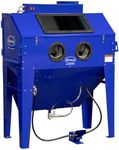
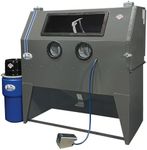
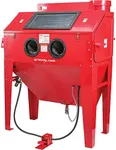
PortabilityPortability is an important factor if you need to move the sandblaster around frequently. Smaller, handheld sandblasters are easy to carry and maneuver, making them ideal for small or detailed tasks. Larger, wheeled sandblasters are more suitable for bigger projects but may be harder to move around. Consider the size and weight of the sandblaster in relation to your workspace and the mobility required for your tasks.