Buying Guide for the Best Ro Di System For Reef Tank
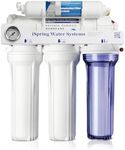
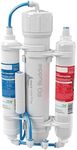
When choosing a Reverse Osmosis Deionization (RO/DI) system for your reef tank, it's important to ensure that the water you use is as pure as possible. This helps to maintain the health of your marine life by removing impurities and contaminants that could be harmful. The right RO/DI system will provide you with high-quality water, which is crucial for the delicate balance of a reef tank. Here are some key specifications to consider when selecting an RO/DI system for your reef tank.Stages of FiltrationThe stages of filtration refer to the number of steps the water goes through to be purified. Each stage typically removes different types of contaminants. A system with more stages generally provides cleaner water. For reef tanks, a 4-stage system (sediment filter, carbon block, RO membrane, and DI resin) is often sufficient. However, more stages can offer additional filtration for specific needs. Choose a system with enough stages to ensure the purity of the water for your reef tank.
Gallons Per Day (GPD)Gallons Per Day (GPD) measures the amount of purified water the system can produce in a day. This is important because it determines how quickly you can get the water you need. Systems typically range from 50 to 200 GPD. For smaller tanks or less frequent water changes, a lower GPD may be sufficient. For larger tanks or more frequent changes, a higher GPD will be more efficient. Consider your tank size and water change schedule to choose the right GPD for your needs.
Rejection RateThe rejection rate indicates the percentage of contaminants the RO membrane can remove from the water. A higher rejection rate means purer water. Most quality RO membranes have a rejection rate of 90-99%. For reef tanks, aim for a system with a rejection rate of at least 95% to ensure the water is free from harmful impurities. This is crucial for maintaining the delicate ecosystem of your reef tank.
Deionization (DI) ResinThe DI resin is the final stage of filtration that removes any remaining ions from the water, ensuring it is completely pure. The quality and type of DI resin can affect the purity of the water. Mixed bed resin is commonly used and effective for reef tanks. Ensure the system you choose has a good quality DI resin and consider how often it will need to be replaced based on your water usage. This will help maintain the purity of the water over time.
Water Pressure RequirementsRO/DI systems require a certain water pressure to function effectively. Most systems need a minimum pressure of around 40-50 psi, but some may require higher. If your water pressure is too low, the system may not work efficiently, and you might need a booster pump. Check your home’s water pressure and ensure it meets the requirements of the system you are considering. This will ensure optimal performance and water purity.
Ease of MaintenanceMaintenance involves replacing filters and DI resin, and occasionally cleaning the system. Systems that are easy to maintain will save you time and effort. Look for systems with clear instructions and readily available replacement parts. Consider how often maintenance is required and choose a system that fits your schedule and comfort level with performing these tasks. Proper maintenance is key to ensuring the longevity and effectiveness of your RO/DI system.