Buying Guide for the Best Rectangle Trampoline
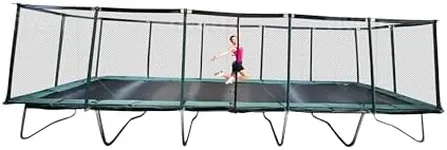
Choosing the right rectangle trampoline can be a fun and rewarding experience, but it's important to consider several key factors to ensure you get the best fit for your needs. Rectangle trampolines are popular for their even bounce and are often used by gymnasts and athletes. When selecting a trampoline, think about who will be using it, where it will be placed, and what features are most important for safety and enjoyment. Here are some key specifications to consider and how to navigate them to find the perfect trampoline for you.SizeThe size of the trampoline is crucial as it determines how much space you will need and how many people can use it at once. Trampolines come in various sizes, typically ranging from small (around 7x10 feet) to large (up to 10x17 feet or more). Smaller trampolines are suitable for younger children or limited spaces, while larger ones are better for older kids, multiple users, or those practicing gymnastics. Consider the available space in your yard and the age and number of users when choosing the size.
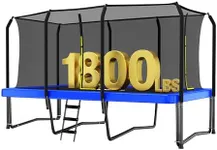
Weight CapacityWeight capacity indicates the maximum weight the trampoline can safely support. This is important for safety and durability. Trampolines with higher weight capacities are generally more robust and can accommodate multiple users or heavier individuals. Typical weight capacities range from 200 to 500 pounds. Choose a trampoline with a weight capacity that exceeds the combined weight of the intended users to ensure safe and enjoyable use.
Frame MaterialThe frame material affects the trampoline's durability and stability. Most trampoline frames are made from galvanized steel, which is resistant to rust and corrosion. Some high-end models may use additional coatings or treatments for extra durability. When selecting a trampoline, look for a sturdy, well-constructed frame that can withstand regular use and various weather conditions. A strong frame ensures the trampoline remains safe and functional for years.
Spring QualitySprings are essential for providing the bounce in a trampoline. The quality and number of springs can significantly impact the trampoline's performance. High-quality springs made from durable materials like galvanized steel offer better elasticity and longevity. More springs generally mean a better bounce, but they should also be of good quality. When choosing a trampoline, consider the spring count and material to ensure a smooth and enjoyable bouncing experience.
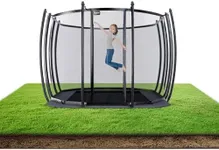
Safety FeaturesSafety features are critical to prevent injuries while using the trampoline. Common safety features include enclosure nets, padded frames, and spring covers. Enclosure nets prevent users from falling off the trampoline, while padding on the frame and springs reduces the risk of injury from impact. When selecting a trampoline, prioritize models with comprehensive safety features, especially if it will be used by children. Ensuring the trampoline has adequate safety measures will provide peace of mind and a safer environment for users.
Mat QualityThe mat is the surface you bounce on, and its quality affects both performance and safety. Trampoline mats are typically made from polypropylene or other durable, UV-resistant materials. A high-quality mat will be strong, flexible, and resistant to wear and tear. When choosing a trampoline, look for a mat that is well-constructed and designed to withstand frequent use and exposure to the elements. A good mat ensures a consistent bounce and long-lasting performance.
Assembly and MaintenanceConsider the ease of assembly and maintenance when choosing a trampoline. Some trampolines come with detailed instructions and all necessary tools, making assembly straightforward, while others may require more effort. Additionally, think about the maintenance required to keep the trampoline in good condition, such as checking for wear and tear, tightening bolts, and cleaning the mat. Choose a trampoline that you feel confident assembling and maintaining to ensure it remains safe and functional over time.