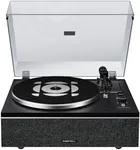
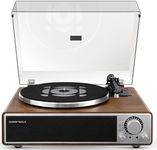
Buying Guide for the Best Record Player With Bluetooth Output
Choosing the right record player with Bluetooth output can be a rewarding experience, especially if you love the warm, rich sound of vinyl but also want the convenience of modern technology. When selecting a record player, it's important to consider several key specifications to ensure you get the best fit for your needs. Understanding these specs will help you make an informed decision and enjoy your music to the fullest.Bluetooth VersionThe Bluetooth version of a record player determines the quality and stability of the wireless connection. Newer versions, such as Bluetooth 5.0, offer better range, faster data transfer, and improved audio quality compared to older versions like Bluetooth 4.0. If you plan to use your record player in a larger space or want the best possible sound quality, opt for a model with a newer Bluetooth version. For casual listening in a smaller area, an older version may suffice.
Turntable SpeedTurntable speed refers to the revolutions per minute (RPM) at which the record spins. The most common speeds are 33 1/3 RPM and 45 RPM, which accommodate most vinyl records. Some record players also support 78 RPM for older records. It's important to choose a record player that supports the speeds of the records you own. If you have a diverse collection, look for a model that offers multiple speed settings.
Cartridge TypeThe cartridge is the component that holds the needle (stylus) and reads the grooves on the record. There are two main types: moving magnet (MM) and moving coil (MC). MM cartridges are more common, easier to replace, and generally more affordable, making them a good choice for most users. MC cartridges can offer superior sound quality but are typically more expensive and require more maintenance. Consider your level of audio enthusiasm and maintenance willingness when choosing a cartridge type.
Built-in PreampA built-in preamp amplifies the signal from the cartridge to a level that can be used by speakers or other audio equipment. Some record players come with a built-in preamp, while others require an external one. If you want a simpler setup and plan to connect directly to Bluetooth speakers or other audio systems, a built-in preamp is convenient. However, if you are an audiophile looking to customize your sound system, you might prefer a model without a built-in preamp so you can choose a high-quality external preamp.
Platter MaterialThe platter is the part of the turntable that the record sits on. Common materials include plastic, aluminum, and acrylic. Plastic platters are lightweight and affordable but may not provide the best sound quality. Aluminum platters offer better stability and sound quality, while acrylic platters are known for their excellent resonance control and high-end performance. If sound quality is a priority, consider a record player with an aluminum or acrylic platter.
Drive TypeRecord players can have either a belt drive or a direct drive. Belt drive turntables use an elastic belt to spin the platter, which helps reduce motor noise and vibration, making them ideal for home listening. Direct drive turntables have the motor directly connected to the platter, providing more consistent speed and durability, which is preferred by DJs and for professional use. Choose a belt drive for better sound quality at home or a direct drive if you need durability and precision for DJing.
Build QualityThe overall build quality of a record player affects its durability, performance, and aesthetic appeal. Look for a sturdy construction with quality materials that can withstand regular use. Features like a solid base, good isolation feet, and a well-designed tonearm contribute to better sound quality and longevity. If you plan to use your record player frequently or want it to be a centerpiece in your room, investing in a model with high build quality is worthwhile.