Buying Guide for the Best Power Reciprocating Saws
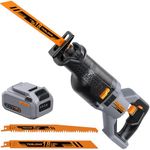
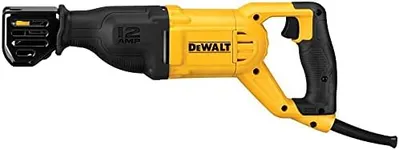
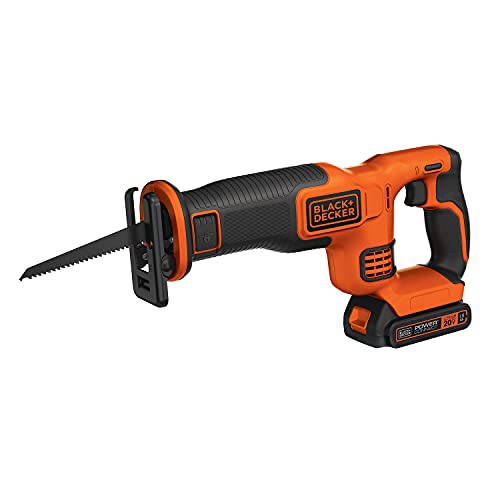
Choosing the right power reciprocating saw can make a big difference in your cutting tasks, whether you're working on a DIY project or a professional job. These saws are versatile tools that can cut through various materials like wood, metal, and plastic. To find the best fit for your needs, it's important to understand the key specifications and how they impact performance. Here are the main specs to consider when selecting a power reciprocating saw.Power SourcePower reciprocating saws can be either corded or cordless. Corded saws are powered by electricity and typically offer more consistent power, making them ideal for heavy-duty tasks. Cordless saws run on batteries, providing greater mobility and convenience, especially for outdoor or remote work. If you need a saw for prolonged use or heavy-duty cutting, a corded model might be best. For occasional use or tasks requiring mobility, a cordless model is more suitable.
Motor PowerMotor power is measured in amps for corded saws and volts for cordless saws. Higher motor power means the saw can handle tougher materials and more demanding tasks. Corded saws usually range from 7 to 15 amps, while cordless saws range from 18 to 60 volts. If you plan to cut through thick or hard materials, opt for a saw with higher motor power. For lighter tasks, a lower power saw will suffice.
Stroke LengthStroke length refers to how far the blade moves back and forth during each cutting motion. Longer stroke lengths can cut through materials faster and more efficiently. Stroke lengths typically range from 1 inch to 1.5 inches. If speed and efficiency are important for your projects, choose a saw with a longer stroke length. For more precise or delicate cuts, a shorter stroke length may be better.
Variable Speed ControlVariable speed control allows you to adjust the speed of the blade to match the material you're cutting. This feature is important for versatility and precision. Saws with variable speed control can range from 0 to 3,000 strokes per minute (SPM). If you need to cut different types of materials, look for a saw with adjustable speed settings. For single-material tasks, a fixed speed saw might be sufficient.
Blade Change SystemThe blade change system determines how easily you can replace the blade. Tool-free blade change systems are more convenient and save time, while traditional systems may require additional tools. If you frequently switch between different blades, a tool-free system is ideal. For occasional blade changes, a traditional system will work just fine.
Weight and ErgonomicsThe weight and ergonomics of the saw affect how comfortable it is to use, especially for extended periods. Lighter saws are easier to handle and reduce fatigue, while ergonomic designs improve grip and control. If you plan to use the saw for long durations or in awkward positions, prioritize a lightweight and ergonomic model. For short, infrequent tasks, weight and ergonomics may be less critical.
Orbital ActionOrbital action refers to the circular motion of the blade in addition to the back-and-forth movement. This feature can make cutting faster and more aggressive, especially in wood. Saws with orbital action usually have adjustable settings. If you need to cut wood quickly and efficiently, look for a saw with orbital action. For more precise cuts or cutting metal, a standard reciprocating motion may be preferable.