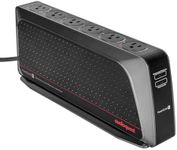
Buying Guide for the Best Power Conditioner Audiophile
When it comes to enhancing your audio experience, a power conditioner can be a crucial component for audiophiles. A power conditioner helps to clean and stabilize the electrical power that your audio equipment receives, which can significantly improve sound quality. To choose the right power conditioner, you need to understand the key specifications and how they align with your specific needs and setup.Power RatingThe power rating of a power conditioner indicates the maximum amount of power it can handle. This is important because it ensures that the conditioner can support all of your audio equipment without overloading. Power ratings are usually measured in watts (W) or volt-amperes (VA). For a small setup with a few components, a lower power rating (around 500-1000W) might suffice. For larger setups with multiple high-power devices, you might need a conditioner with a higher power rating (2000W or more). Assess the total power consumption of your audio equipment to determine the appropriate power rating for your needs.
Number of OutletsThe number of outlets on a power conditioner determines how many devices you can connect to it. This is important for ensuring that all your audio components can be plugged in and protected. Power conditioners can have anywhere from a few outlets to over a dozen. If you have a simple setup with just a few devices, a conditioner with 4-6 outlets may be sufficient. For more complex setups with multiple components like amplifiers, receivers, and turntables, you might need a conditioner with 8-12 or more outlets. Consider the number of devices you plan to connect and choose a conditioner with enough outlets to accommodate them.
Noise FilteringNoise filtering refers to the power conditioner's ability to reduce electrical noise and interference that can affect audio quality. This is crucial for audiophiles who want the clearest and most accurate sound possible. Noise filtering is often measured in decibels (dB), with higher values indicating better noise reduction. Basic models may offer noise filtering around 20-30dB, which can be sufficient for casual listening. For high-fidelity audio systems, look for conditioners with noise filtering of 40dB or higher to ensure minimal interference and the best sound quality. Consider the level of audio quality you desire and choose a conditioner with appropriate noise filtering capabilities.
Surge ProtectionSurge protection is a feature that protects your audio equipment from voltage spikes and surges, which can cause damage. This is important for safeguarding your investment in high-quality audio gear. Surge protection is typically measured in joules, with higher values indicating better protection. A basic level of surge protection might be around 1000-2000 joules, which can be adequate for smaller setups. For more extensive and expensive audio systems, look for conditioners with surge protection of 3000 joules or more. Evaluate the value and sensitivity of your equipment to determine the level of surge protection you need.
Voltage RegulationVoltage regulation ensures that your audio equipment receives a consistent voltage level, which is important for maintaining optimal performance and preventing damage. Fluctuations in voltage can affect sound quality and the longevity of your equipment. Some power conditioners offer basic voltage regulation, which can be sufficient for stable power environments. For areas with frequent voltage fluctuations, look for conditioners with advanced voltage regulation features that can maintain a steady voltage output. Consider the stability of your local power supply and the sensitivity of your audio equipment when choosing a conditioner with the appropriate level of voltage regulation.
Build QualityThe build quality of a power conditioner affects its durability and reliability. This is important for ensuring long-term performance and protection of your audio equipment. High-quality materials and construction can provide better heat dissipation, sturdiness, and overall longevity. Basic models may use plastic housings, which can be sufficient for less demanding environments. For more robust and reliable performance, look for conditioners with metal housings and high-quality internal components. Consider the environment in which you will use the conditioner and the importance of long-term reliability when evaluating build quality.