Buying Guide for the Best Pond Water Test Kit
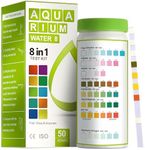
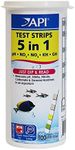
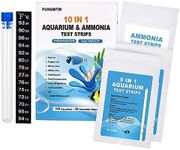
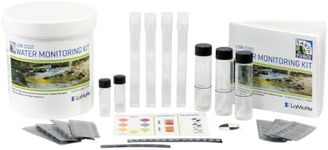
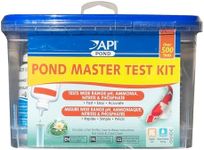
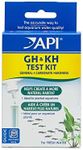
Choosing the right pond water test kit is essential for maintaining a healthy and balanced aquatic environment. A good test kit will help you monitor the water quality, ensuring that your pond's ecosystem remains safe for fish, plants, and other aquatic life. When selecting a pond water test kit, it's important to understand the key specifications and how they relate to your specific needs. Here are the main factors to consider when choosing a pond water test kit.Parameters TestedThis spec refers to the different water quality parameters that the test kit can measure, such as pH, ammonia, nitrite, nitrate, and phosphate levels. These parameters are important because they indicate the overall health of your pond. For example, high ammonia levels can be toxic to fish, while an imbalanced pH can affect plant growth. Test kits that measure a wide range of parameters are generally more useful, especially for larger or more complex ponds. If you have a simple pond with just a few fish, a basic kit that tests for pH and ammonia might be sufficient. However, for more diverse ecosystems, a comprehensive kit that includes tests for multiple parameters is recommended.
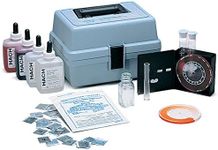
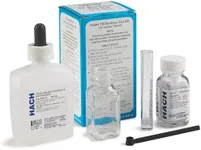
AccuracyAccuracy refers to how close the test results are to the actual water conditions. This is important because accurate readings allow you to make informed decisions about how to manage your pond. Test kits with higher accuracy provide more reliable data, which is crucial for maintaining a healthy environment. Accuracy can vary between different brands and types of test kits. Liquid test kits are generally more accurate than test strips, but they can be more time-consuming to use. If precision is critical for your pond management, opt for a liquid test kit with a good reputation for accuracy.
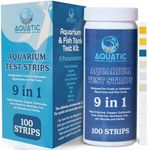
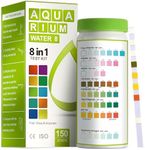
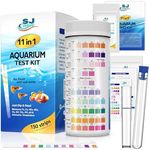
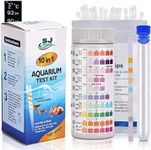
Ease of UseEase of use refers to how simple and straightforward the test kit is to operate. This is important because a complicated test kit can lead to user errors and inaccurate results. Test strips are typically easier to use than liquid test kits, as they involve dipping a strip into the water and comparing the color change to a chart. Liquid test kits, on the other hand, often require mixing reagents and following more detailed instructions. If you are new to pond maintenance or prefer a quick and easy testing process, test strips might be the best choice. However, if you are comfortable with a more involved process and want more precise results, a liquid test kit could be more suitable.
Frequency of TestingThis spec refers to how often you need to test your pond water. Regular testing is important to catch any changes in water quality before they become serious problems. Some test kits are designed for frequent use and come with a large number of tests, while others are intended for occasional use and may have fewer tests included. If your pond is heavily stocked with fish or has a lot of plant life, you may need to test the water more frequently, so a kit with a higher number of tests would be beneficial. For ponds with fewer inhabitants or less biological activity, a kit with fewer tests might be sufficient.
Cost per TestCost per test refers to the price you pay for each individual test within the kit. This is important because it can affect the overall cost of maintaining your pond. Kits with a lower cost per test are more economical, especially if you need to test your water frequently. To determine the cost per test, divide the total cost of the kit by the number of tests it includes. If you are on a tight budget or need to test your water often, look for a kit that offers a lower cost per test. However, keep in mind that cheaper kits may not always provide the same level of accuracy or range of parameters as more expensive options.