Buying Guide for the Best Polymer Clay
Choosing the right polymer clay can be a fun and rewarding experience, especially if you know what to look for. Polymer clay is a versatile material used for crafting, sculpting, and jewelry making. It comes in various types, each with its own unique properties. Understanding these properties will help you select the best clay for your specific project needs. Here are some key specifications to consider when choosing polymer clay.HardnessHardness refers to how firm or soft the clay is before and after baking. This is important because it affects how easy the clay is to work with and how durable the final product will be. Softer clays are easier to mold and shape, making them ideal for beginners or intricate details. Firmer clays hold their shape better and are more durable, which is great for larger projects or items that will be handled frequently. Choose a softer clay if you are new to polymer clay or working on detailed pieces, and a firmer clay for more robust projects.
FlexibilityFlexibility refers to how much the clay can bend without breaking after it has been baked. This is crucial for items that need to be durable and withstand some wear and tear, such as jewelry or figurines. Clays with higher flexibility are less likely to crack or break under stress. If your project involves making items that will be moved or handled often, opt for a clay with good flexibility. For static displays or items that won't be handled much, flexibility is less of a concern.
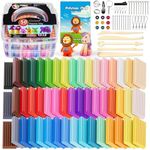
Color RangeThe color range of polymer clay is important for achieving the desired look of your project. Some brands offer a wide variety of colors, while others may have a more limited palette. Additionally, some clays can be easily mixed to create custom colors. If your project requires specific colors or a lot of color variety, choose a brand with a broad color range or one that mixes well. For simpler projects, a basic set of primary colors may suffice.
TextureTexture refers to the feel of the clay, whether it is smooth, grainy, or somewhere in between. This affects how the clay handles and the finish of the final product. Smooth clays are easier to work with and provide a polished finish, making them ideal for detailed work and fine jewelry. Grainy clays can add interesting textures to your projects but may be harder to work with. Choose a smooth clay for a refined look and easier handling, or a textured clay for a more rustic or unique finish.
Baking TemperatureBaking temperature is the temperature at which the clay needs to be baked to harden properly. This is important because different clays have different baking requirements, and using the wrong temperature can ruin your project. Most polymer clays bake at a temperature between 230°F and 275°F (110°C to 135°C). Always check the packaging for the recommended baking temperature and ensure your oven can maintain that temperature accurately. Choose a clay with a baking temperature that matches your oven's capabilities and your comfort level with baking.
Work TimeWork time refers to how long the clay remains pliable and workable before it starts to harden. This is important for planning your project and ensuring you have enough time to complete your work without the clay becoming too stiff. Some clays have a longer work time, which is beneficial for complex projects or beginners who need more time to shape and mold the clay. If you are working on a detailed or time-consuming project, choose a clay with a longer work time. For quicker projects, a shorter work time may be sufficient.