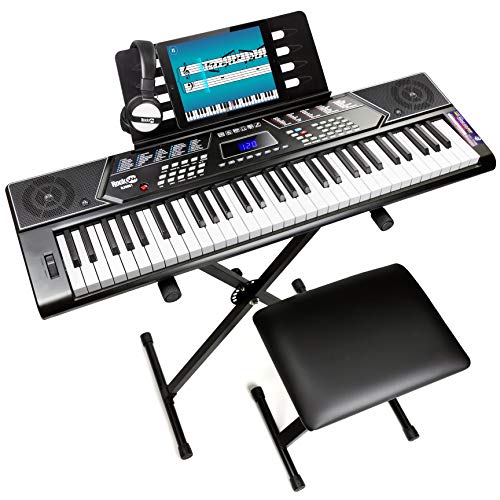
Buying Guide for the Best Piano Keyboard For Beginner
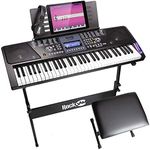
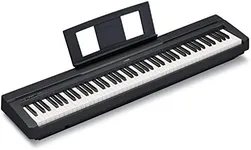
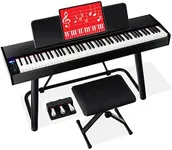
Choosing the right piano keyboard for a beginner can be a crucial step in fostering a love for music and ensuring a smooth learning experience. The right keyboard should be easy to use, have the necessary features to support learning, and be enjoyable to play. Here are some key specifications to consider when selecting a piano keyboard for a beginner, along with explanations to help you understand their importance and how to choose the best fit for your needs.Number of KeysThe number of keys on a keyboard determines the range of notes you can play. Full-sized pianos have 88 keys, but for beginners, keyboards with 61 or 76 keys can be sufficient. A 61-key keyboard is more compact and easier to handle, making it a good choice for younger players or those with limited space. A 76-key keyboard offers a broader range and can be a good middle ground for those who want more versatility without the full size of an 88-key keyboard. Consider the type of music you want to play and the space you have available when choosing the number of keys.
Touch SensitivityTouch sensitivity refers to how the keyboard responds to the pressure of your fingers. A touch-sensitive keyboard will produce louder sounds when you press the keys harder and softer sounds when you press them gently, mimicking the feel of an acoustic piano. This feature is important for developing proper finger strength and dynamics in playing. Keyboards can be non-touch sensitive, touch sensitive, or have graded hammer action. For beginners, touch-sensitive keys are recommended as they provide a more realistic playing experience and help in building proper technique.
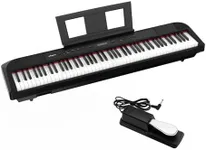
PolyphonyPolyphony is the number of notes a keyboard can produce at the same time. Higher polyphony allows for more complex and sustained sounds, which is important for playing more intricate pieces of music. Keyboards typically offer polyphony ranging from 32 to 256 notes. For beginners, a polyphony of 64 or 128 notes is usually sufficient, as it allows for a good range of expression and the ability to play with sustain pedal effects without notes cutting off unexpectedly.
Built-in Learning FeaturesMany beginner keyboards come with built-in learning features such as light-up keys, lesson modes, and accompaniment tracks. These features can be very helpful for new players as they provide guided practice and make learning more engaging. Light-up keys can show you which notes to play, while lesson modes can break down songs into manageable sections. Accompaniment tracks can make practice sessions more fun by providing a full band sound. Look for keyboards with these features if you want additional support in your learning journey.
PortabilityPortability is an important factor if you need to move your keyboard frequently or have limited space. Lighter and more compact keyboards are easier to transport and store. Consider the weight and size of the keyboard, as well as whether it comes with a carrying case or stand. If you plan to take your keyboard to lessons or practice sessions outside of your home, a portable model will be more convenient.
Connectivity OptionsConnectivity options such as USB, MIDI, and headphone jacks can enhance your learning and playing experience. USB and MIDI connections allow you to connect your keyboard to a computer or other devices for recording, using music software, or accessing online lessons. Headphone jacks are useful for practicing quietly without disturbing others. Consider what additional equipment you might use and choose a keyboard with the appropriate connectivity options to support your needs.
Sound QualitySound quality is crucial for an enjoyable playing experience. Higher-quality keyboards will have better sound samples and more realistic tones. Listen to the different sounds a keyboard can produce and choose one that you find pleasing. Some keyboards also offer a variety of instrument sounds and effects, which can add fun and versatility to your practice sessions. For beginners, a keyboard with good piano sound quality and a few additional instrument voices is usually sufficient.