Buying Guide for the Best Personal Weather Station
Choosing a personal weather station can be a rewarding experience, especially if you enjoy tracking weather patterns or need accurate local weather data for gardening, farming, or other outdoor activities. The right weather station will provide you with reliable and precise information, helping you make informed decisions based on the weather. To pick the best fit for you, consider the following key specifications and understand how they align with your needs.SensorsSensors are the components that measure various weather parameters such as temperature, humidity, wind speed, and rainfall. The importance of sensors lies in their ability to provide accurate and comprehensive weather data. Basic models may only include temperature and humidity sensors, while more advanced models can measure wind speed, direction, rainfall, UV levels, and even soil moisture. If you need detailed weather information for activities like farming or scientific research, opt for a station with a wide range of sensors. For general home use, a basic set of sensors may suffice.
AccuracyAccuracy refers to how close the weather station's readings are to the actual weather conditions. This is crucial because inaccurate data can lead to poor decision-making. Accuracy can vary between models, with professional-grade stations offering higher precision. When evaluating accuracy, look for specifications on the margin of error for each sensor. For casual use, a small margin of error is acceptable, but for critical applications like agriculture or research, choose a station with high accuracy.
ConnectivityConnectivity determines how the weather station communicates its data to you. This can include wireless transmission to a console, Wi-Fi connectivity for online data access, or integration with smart home systems. Connectivity is important for convenience and real-time data access. If you want to monitor weather conditions remotely or integrate the station with other smart devices, look for models with Wi-Fi or smart home compatibility. For basic monitoring, a simple wireless connection to a console may be sufficient.
Data Logging and StorageData logging and storage capabilities allow the weather station to record and store weather data over time. This is important for tracking trends and analyzing historical weather patterns. Some stations offer internal memory, while others use cloud storage. If you need to keep long-term records or analyze data trends, choose a station with robust data logging and storage options. For short-term monitoring, basic data logging may be adequate.
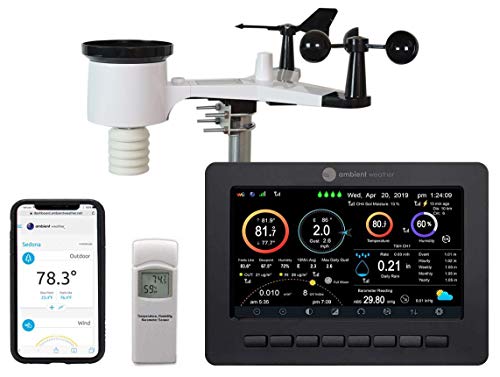
Display and InterfaceThe display and interface refer to how the weather data is presented to you. This can range from a simple LCD screen to a more advanced color display with graphical representations. A good display is important for ease of use and quick data interpretation. If you prefer a clear and detailed view of the weather data, opt for a station with a high-quality display. For those who only need basic information, a simpler display will do.
Durability and Build QualityDurability and build quality are about how well the weather station can withstand various environmental conditions. This is crucial for ensuring the longevity and reliability of the device. Weather stations are often exposed to harsh weather, so look for models made from durable materials and with good weatherproofing. If you live in an area with extreme weather conditions, prioritize a station with high durability. For milder climates, standard build quality may be sufficient.
Power SourceThe power source of a weather station can be batteries, solar power, or a direct electrical connection. The power source is important for the continuous operation of the station. Battery-powered stations offer flexibility in placement but require regular battery changes. Solar-powered stations are eco-friendly and low-maintenance but need sufficient sunlight. Direct electrical connections provide constant power but limit placement options. Choose a power source that aligns with your convenience and placement needs.