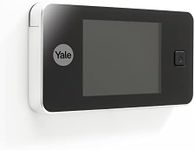
Buying Guide for the Best Peephole Camera
Choosing the right peephole camera for your home is essential for ensuring security and peace of mind. A peephole camera allows you to see who is at your door without having to open it, providing an added layer of safety. When selecting a peephole camera, it's important to consider several key specifications to ensure you get the best fit for your needs. Here are the main specs to look at and how to navigate them.ResolutionResolution refers to the clarity and detail of the image captured by the camera. Higher resolution means a clearer and more detailed image. Common resolutions include 720p, 1080p, and 4K. For most users, 1080p is sufficient as it provides a good balance between image quality and storage space. If you need very high detail, such as for identifying faces from a distance, you might consider a 4K camera. However, for basic monitoring, 720p can be adequate.
Field of ViewField of view (FOV) is the extent of the observable area that the camera can capture. A wider FOV allows you to see more of the area outside your door. FOV is typically measured in degrees, with common values ranging from 90 to 180 degrees. If you want to see a broad area, such as the entire porch or yard, opt for a camera with a wider FOV. For narrower spaces, a smaller FOV might be sufficient.
Night VisionNight vision is the camera's ability to capture clear images in low light or complete darkness. This feature is crucial for security during nighttime. Night vision capabilities can vary, with some cameras using infrared LEDs to illuminate the area. When choosing a peephole camera, consider how well it performs in low light conditions. If you need to monitor your door at night, ensure the camera has good night vision capabilities.
Motion DetectionMotion detection allows the camera to start recording or send alerts when it detects movement. This feature is important for security as it helps you know when someone is at your door. Some cameras offer adjustable sensitivity settings to reduce false alarms. If you want to be notified of any activity outside your door, look for a camera with reliable motion detection.
Storage OptionsStorage options refer to how the camera saves the recorded footage. Common options include local storage (such as a microSD card) and cloud storage. Local storage is usually more cost-effective but can be limited in capacity. Cloud storage offers more space and remote access but may require a subscription. Consider how much footage you need to store and whether you prefer local or cloud storage.
Power SourceThe power source of the peephole camera can be either battery-powered or wired. Battery-powered cameras are easier to install and more flexible in terms of placement, but they require regular battery changes or recharging. Wired cameras offer continuous power without the need for battery maintenance but may require more complex installation. Choose based on your preference for convenience versus installation complexity.
ConnectivityConnectivity refers to how the camera communicates with your devices, such as smartphones or tablets. Most modern peephole cameras use Wi-Fi to connect to your home network, allowing you to view the footage remotely. Some cameras also offer Bluetooth or other wireless connections. Ensure the camera you choose is compatible with your home network and devices for seamless monitoring.
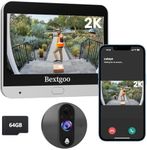
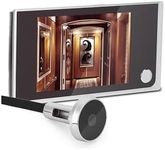
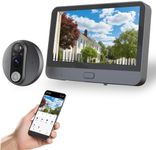
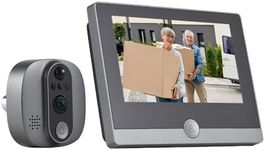
Display ScreenSome peephole cameras come with a built-in display screen that allows you to see who is at the door without needing a separate device. This can be convenient for quick glances. If you prefer to use your smartphone or another device to view the footage, a display screen may not be necessary. Consider whether you want the added convenience of an integrated display.