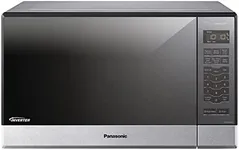
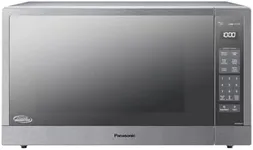
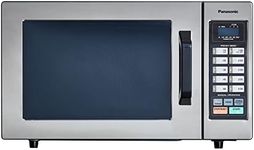
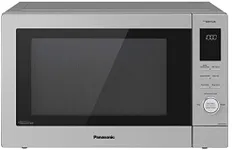
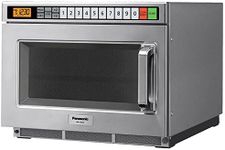
Buying Guide for the Best Panasonic Microwaves
When choosing a Panasonic microwave, it's important to consider your specific needs and preferences to ensure you get the best fit for your kitchen and cooking habits. Microwaves come with a variety of features and specifications that can greatly impact their performance and convenience. Understanding these key specs will help you make an informed decision.WattageWattage refers to the power of the microwave, which affects how quickly and evenly it can cook food. Higher wattage microwaves (900-1200 watts) cook food faster and more evenly, making them ideal for busy households or those who frequently use the microwave for cooking meals. Mid-range wattage (700-900 watts) is suitable for general use, such as reheating leftovers and cooking simple dishes. Lower wattage microwaves (below 700 watts) are slower and may not cook food as evenly, but they can be sufficient for basic tasks like warming beverages or snacks. Consider your cooking habits and choose a wattage that matches your needs.
CapacityCapacity is the internal size of the microwave, usually measured in cubic feet. It determines how much food you can cook at once. Small microwaves (0.5-0.9 cubic feet) are compact and suitable for small kitchens or limited counter space, ideal for single individuals or small families. Medium microwaves (1.0-1.5 cubic feet) offer a balance between size and cooking capacity, suitable for most households. Large microwaves (1.6 cubic feet and above) are great for larger families or those who frequently cook large dishes. Consider the size of your kitchen and the typical amount of food you cook when choosing the capacity.
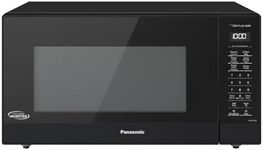
Inverter TechnologyInverter technology allows the microwave to deliver consistent power levels, which helps cook food more evenly and prevents overcooking. This feature is particularly useful for delicate foods like fish or for defrosting, as it maintains a steady power level rather than cycling on and off. If you often cook a variety of dishes and want precise control over cooking, a microwave with inverter technology can be a great choice.
Sensor CookingSensor cooking uses built-in sensors to detect the humidity and temperature of the food, automatically adjusting the cooking time and power level for optimal results. This feature takes the guesswork out of cooking and ensures your food is cooked perfectly every time. If you prefer convenience and ease of use, look for a microwave with sensor cooking capabilities.
Pre-programmed SettingsPre-programmed settings are preset cooking times and power levels for common foods like popcorn, pizza, and vegetables. These settings simplify the cooking process and ensure consistent results. If you frequently cook specific types of food, having pre-programmed settings can save you time and effort.
Turntable vs. FlatbedMicrowaves typically come with either a turntable or a flatbed design. A turntable rotates the food to ensure even cooking, while a flatbed design uses advanced technology to distribute microwaves evenly without the need for rotation. Turntable microwaves are more common and generally more affordable, while flatbed microwaves offer more cooking space and can accommodate larger dishes. Consider your cooking needs and kitchen space when deciding between these two options.
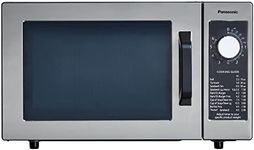
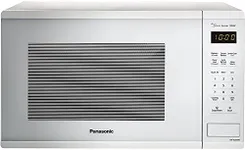
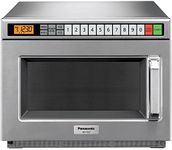
Control PanelThe control panel is the interface you use to operate the microwave. It can be digital or mechanical, with digital panels offering more precise control and additional features like timers and clocks. Mechanical panels are simpler and more straightforward to use. Choose a control panel that you find easy to navigate and that offers the features you need.
Size and DesignThe size and design of the microwave should complement your kitchen's layout and aesthetic. Consider the external dimensions to ensure it fits in your designated space, whether it's on the countertop or built into cabinetry. Additionally, look for a design that matches your kitchen decor, whether you prefer a sleek, modern look or a more traditional style.