Buying Guide for the Best Multi Bit Screwdriver
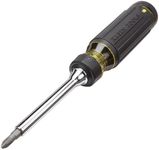
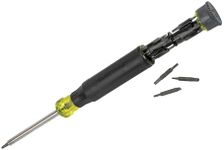
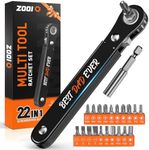
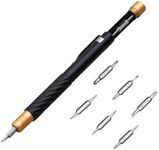
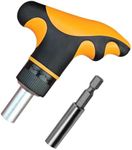
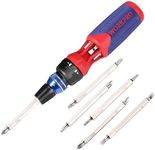
Choosing the right multi-bit screwdriver can make your DIY projects and repairs much easier and more efficient. A multi-bit screwdriver is a versatile tool that allows you to switch between different types of screwdriver bits, making it a convenient and space-saving option for your toolbox. To find the best fit for you, it's important to consider several key specifications that will determine the tool's usability, durability, and overall performance.Bit Types and VarietyThe bit types and variety refer to the different screwdriver bits that come with the tool. This is important because it determines the range of screws you can work with. Common bit types include Phillips, flathead, Torx, and hex. A good multi-bit screwdriver should include a variety of these bits to handle different tasks. If you frequently work on electronics, look for precision bits. For general household use, a mix of common sizes and types will be sufficient. Choose a set that matches the types of screws you encounter most often in your projects.
Bit StorageBit storage refers to how the bits are stored within or alongside the screwdriver. This is important for convenience and organization. Some screwdrivers have internal storage in the handle, while others come with a separate case. Internal storage is great for portability and quick access, but it may limit the number of bits you can carry. A separate case can hold more bits but may be less convenient to carry around. Consider how you plan to use the screwdriver and whether you need quick access to a few bits or a larger variety stored separately.
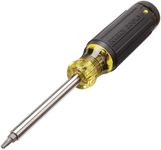
Handle Comfort and GripHandle comfort and grip are crucial for prolonged use and precision. A comfortable handle reduces hand fatigue and improves control. Look for ergonomic designs with soft, non-slip materials. Handles with a textured grip can provide better control, especially in slippery conditions. If you have larger hands, ensure the handle is big enough to hold comfortably. For smaller hands, a more compact handle might be preferable. Test the handle if possible to ensure it feels good in your hand and provides a secure grip.
Bit Change MechanismThe bit change mechanism is how you swap out the bits on the screwdriver. This is important for efficiency and ease of use. Common mechanisms include magnetic holders, quick-release chucks, and manual screw-in types. Magnetic holders are quick and easy but may not hold bits as securely. Quick-release chucks offer a balance of speed and security. Manual screw-in types are very secure but can be slower to change. Consider how often you need to change bits and choose a mechanism that balances speed and security for your needs.
Durability and Build QualityDurability and build quality refer to how well the screwdriver and bits are made. This is important for long-term use and reliability. Look for screwdrivers made from high-quality materials like chrome-vanadium steel for the bits and sturdy plastic or metal for the handle. A well-built screwdriver will withstand frequent use and resist wear and tear. If you plan to use the tool frequently or for heavy-duty tasks, prioritize durability. For occasional light use, a less robust but still well-made option may suffice.
Length and SizeThe length and size of the screwdriver can affect its usability in different situations. This is important for reaching screws in tight or hard-to-reach places. Longer screwdrivers provide better leverage and can reach deeper screws, while shorter ones are more maneuverable in confined spaces. Consider the typical tasks you perform and choose a length that suits those needs. If you work in tight spaces often, a shorter, more compact screwdriver will be beneficial. For general use, a medium length is usually a good compromise.