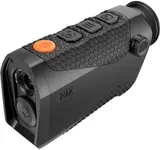
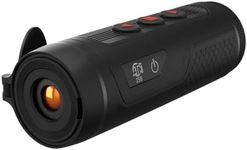
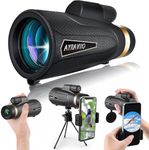
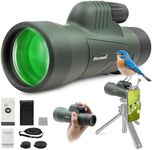
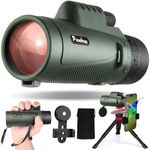
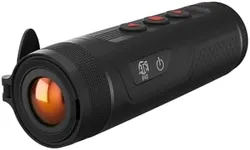
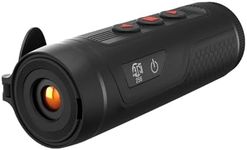
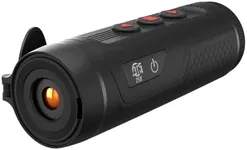
Buying Guide for the Best Monocular For Hunting
Choosing the right monocular for hunting can greatly enhance your experience and effectiveness in the field. A monocular is a compact, lightweight optical device that allows you to see distant objects clearly with one eye. When selecting a monocular for hunting, it's important to consider several key specifications to ensure it meets your needs and preferences. Here are the key specs to look out for and how to navigate them.MagnificationMagnification refers to how much closer the object appears compared to the naked eye. This is important because higher magnification allows you to see more detail from a distance. Monoculars typically range from 6x to 12x magnification. Lower magnification (6x-8x) provides a wider field of view and is easier to keep steady, making it suitable for scanning large areas. Higher magnification (10x-12x) offers more detail but can be harder to stabilize and may have a narrower field of view. Choose a magnification level based on the terrain and the distance you expect to observe.
Objective Lens DiameterThe objective lens diameter is the size of the front lens, measured in millimeters. This spec is important because a larger lens allows more light to enter, resulting in a brighter and clearer image, especially in low-light conditions. Common sizes range from 20mm to 50mm. Smaller lenses (20mm-30mm) make the monocular more compact and lightweight, ideal for daytime use. Larger lenses (40mm-50mm) are better for dawn, dusk, or dense forest environments where light is limited. Consider the lighting conditions of your hunting environment when choosing the lens size.
Field of ViewField of view (FOV) is the width of the area you can see through the monocular, usually measured in feet at 1,000 yards. A wider FOV allows you to see more of the landscape at once, which is useful for tracking moving targets or scanning large areas. Monoculars with a lower magnification typically have a wider FOV. If you need to observe fast-moving animals or cover a broad area, opt for a monocular with a wider FOV. For detailed observation of stationary targets, a narrower FOV may suffice.
Lens CoatingLens coating refers to the special treatments applied to the lenses to reduce glare and improve light transmission. This is important for achieving a clearer and brighter image. Coatings can be single-layer or multi-layer, with multi-layer coatings providing better performance. Look for terms like 'fully multi-coated' for the best image quality. If you hunt in bright sunlight or low-light conditions, high-quality lens coatings can make a significant difference in visibility and clarity.
Waterproof and FogproofWaterproof and fogproof features ensure that the monocular can withstand harsh weather conditions and changes in temperature without getting damaged or fogging up. This is crucial for hunting, as you may encounter rain, snow, or humidity. Monoculars with these features are typically sealed with O-rings and filled with nitrogen or argon gas. If you hunt in varying weather conditions, prioritize a monocular with waterproof and fogproof capabilities to ensure reliability and durability.
Size and WeightThe size and weight of the monocular affect its portability and ease of use. A compact and lightweight monocular is easier to carry and handle, especially during long hunting trips. However, smaller monoculars may have smaller objective lenses and lower magnification. Consider how much gear you typically carry and how long you spend in the field. If you need something easy to carry, opt for a smaller, lighter model. If image quality is more important, you might be willing to carry a slightly larger and heavier monocular.
Eye ReliefEye relief is the distance between your eye and the eyepiece while still seeing the full field of view. This is important for comfort, especially if you wear glasses. Longer eye relief (15mm or more) is better for eyeglass wearers, as it allows you to see the entire image without having to press your eye close to the lens. If you wear glasses or plan to use the monocular for extended periods, look for a model with longer eye relief to ensure comfort and ease of use.