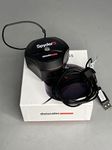
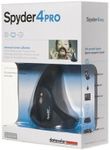
Buying Guide for the Best Monitor Calibration Tool
Choosing the right monitor calibration tool is essential for ensuring that the colors displayed on your monitor are accurate and consistent. This is particularly important for professionals in fields such as photography, graphic design, and video editing, where color accuracy is crucial. When selecting a monitor calibration tool, you need to consider several key specifications to find the best fit for your needs. Understanding these specifications will help you make an informed decision and achieve the best possible results from your calibration tool.Calibration TypeCalibration type refers to the method the tool uses to adjust your monitor's color settings. There are two main types: hardware calibration and software calibration. Hardware calibration involves using a device that directly adjusts the monitor's internal settings, providing more accurate and consistent results. Software calibration, on the other hand, uses software to adjust the color settings through your computer's graphics card. If you need the highest level of color accuracy, especially for professional work, hardware calibration is the better choice. For general use or less critical applications, software calibration may be sufficient.
Supported Color SpacesColor spaces are specific ranges of colors that a monitor can display. Common color spaces include sRGB, Adobe RGB, and DCI-P3. The supported color spaces of a calibration tool determine which color ranges it can accurately calibrate. If you work in photography or web design, sRGB support is essential. For print work or professional photography, Adobe RGB support is important due to its wider color range. For video production, DCI-P3 support is beneficial. Choose a calibration tool that supports the color spaces relevant to your work to ensure accurate color representation.
Ease of UseEase of use refers to how user-friendly the calibration tool is. This includes the setup process, the calibration procedure, and the software interface. Some tools come with step-by-step guides and intuitive software, making them easier for beginners to use. Others may require more technical knowledge and experience. If you are new to monitor calibration, look for a tool with a straightforward setup and user-friendly software. If you are more experienced, you might prefer a tool with advanced features and customization options.
CompatibilityCompatibility refers to whether the calibration tool works with your specific monitor and operating system. Some tools are designed to work with a wide range of monitors and operating systems, while others may be more limited. Check the specifications of the calibration tool to ensure it is compatible with your monitor model and the operating system you use (e.g., Windows, macOS). Ensuring compatibility will prevent any issues during the calibration process and ensure optimal performance.
Measurement AccuracyMeasurement accuracy refers to how precisely the calibration tool can measure and adjust your monitor's color settings. Higher accuracy tools use more advanced sensors and algorithms to provide more precise calibration. This is particularly important for professional work where color accuracy is critical. If you need the highest level of precision, look for a tool with high measurement accuracy. For general use, a tool with standard accuracy may be sufficient.
Software FeaturesSoftware features refer to the additional functionalities provided by the calibration tool's software. These can include features like ambient light measurement, multiple monitor support, and advanced profiling options. Ambient light measurement adjusts the monitor's settings based on the lighting conditions in your environment, ensuring consistent color accuracy. Multiple monitor support allows you to calibrate several monitors simultaneously. Advanced profiling options provide more control over the calibration process. Consider which features are important for your needs and choose a tool that offers those functionalities.