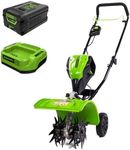
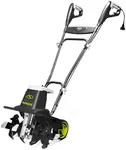
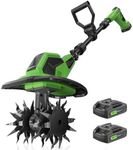
Buying Guide for the Best Mini Tiller Cultivator
Choosing the right mini-tiller cultivator can make a significant difference in the ease and efficiency of your gardening tasks. A mini-tiller cultivator is a versatile tool designed to help you prepare your garden soil, making it easier to plant and maintain your garden. When selecting a mini-tiller cultivator, it's important to consider several key specifications to ensure you get the best fit for your gardening needs. Understanding these specifications will help you make an informed decision and choose a model that suits your specific requirements.Engine PowerEngine power, measured in horsepower (HP) or cubic centimeters (cc), determines the strength and capability of the mini-tiller cultivator. Higher engine power means the tiller can handle tougher soil and larger areas more efficiently. For small gardens with soft soil, an engine with lower power (around 20-30cc) is sufficient. For larger gardens or tougher soil, consider a more powerful engine (above 30cc). Your choice should depend on the size of your garden and the type of soil you have.
Tilling WidthTilling width refers to the width of the area that the tiller can cover in a single pass. This is important because it affects how quickly you can till your garden. A wider tilling width (around 9-12 inches) is ideal for larger gardens as it covers more ground faster. For smaller gardens or tight spaces, a narrower tilling width (around 6-8 inches) is more manageable and allows for greater precision. Choose a tilling width based on the size of your garden and how much maneuverability you need.
Tilling DepthTilling depth indicates how deep the tines of the tiller can penetrate the soil. This is crucial for preparing the soil properly for planting. Shallow tilling depths (around 4-6 inches) are suitable for light soil preparation and mixing in compost. Deeper tilling depths (around 8-10 inches) are necessary for breaking up hard or compacted soil. Consider the type of plants you intend to grow and the condition of your soil when choosing the tilling depth.
WeightThe weight of the mini-tiller cultivator affects its ease of use and maneuverability. Lighter models (under 25 pounds) are easier to handle and transport, making them ideal for smaller gardens and less physically demanding tasks. Heavier models (over 25 pounds) provide more stability and are better suited for larger gardens and tougher soil conditions. Your physical strength and the size of your garden should guide your choice in weight.
Handle DesignThe design of the handles on a mini-tiller cultivator can greatly impact comfort and control during use. Ergonomically designed handles with adjustable heights and cushioned grips reduce strain and fatigue, making the tiller easier to operate for extended periods. Fixed handles may be less comfortable but are often more durable. Consider how long you will be using the tiller and your comfort preferences when evaluating handle design.
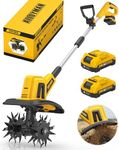
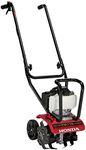
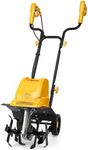
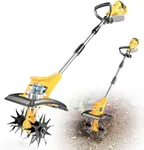
Fuel TypeMini-tiller cultivators can be powered by gasoline, electricity, or batteries. Gasoline-powered tillers offer more power and are suitable for larger gardens and tougher soil but require more maintenance. Electric tillers are lighter, quieter, and easier to maintain, making them ideal for small to medium gardens with access to power outlets. Battery-powered tillers offer the convenience of cordless operation but may have limited run time. Choose the fuel type based on the size of your garden, the availability of power sources, and your preference for maintenance.