Buying Guide for the Best Min Max Thermometers
When choosing a min-max thermometer, it's important to understand the key features and specifications that will help you find the best fit for your needs. A min-max thermometer is designed to record the minimum and maximum temperatures over a period of time, which is useful for monitoring environments like greenhouses, refrigerators, or outdoor spaces. By understanding the key specs, you can ensure that you select a thermometer that meets your specific requirements and provides accurate and reliable readings.Temperature RangeThe temperature range indicates the minimum and maximum temperatures that the thermometer can measure. This is important because it determines the suitability of the thermometer for different environments. For example, if you need to monitor a freezer, you'll need a thermometer that can measure very low temperatures. Conversely, for a greenhouse, you'll need one that can measure higher temperatures. To choose the right range, consider the typical temperature extremes of the environment you will be monitoring.
AccuracyAccuracy refers to how close the thermometer's readings are to the actual temperature. This is crucial for ensuring reliable data, especially in environments where precise temperature control is necessary, such as in scientific research or food storage. Accuracy is usually expressed in degrees, such as ±1°C. Higher accuracy is generally better, but it may not be necessary for all applications. For general use, a thermometer with an accuracy of ±1-2°C is often sufficient, while more critical applications may require higher accuracy.
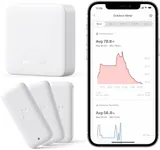
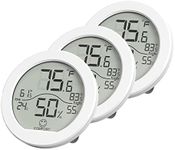
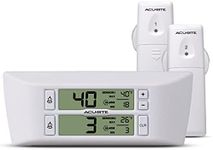
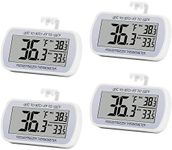
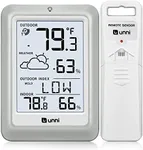
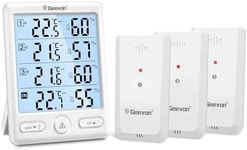
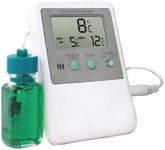
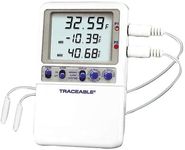
Display TypeThe display type can be either analog or digital. Analog displays use a dial or needle to show the temperature, while digital displays use an electronic screen. Digital displays are often easier to read and can provide additional information, such as the current temperature, minimum and maximum temperatures, and sometimes even humidity levels. Analog displays, on the other hand, do not require batteries and can be more durable. Choose a display type based on your preference for readability and the need for additional features.
Memory FunctionThe memory function allows the thermometer to store the minimum and maximum temperatures recorded over a period of time. This is important for tracking temperature fluctuations and identifying trends. Some thermometers reset automatically after a certain period, while others require manual resetting. If you need to monitor temperature changes over long periods, look for a thermometer with a robust memory function that suits your monitoring schedule.
Sensor TypeMin-max thermometers can use different types of sensors, such as liquid-in-glass, bimetallic, or electronic sensors. Liquid-in-glass and bimetallic sensors are typically found in analog thermometers and are known for their durability and simplicity. Electronic sensors are used in digital thermometers and can offer higher accuracy and additional features. Choose a sensor type based on your need for accuracy, durability, and any additional features you may require.
Durability and Build QualityDurability and build quality are important factors, especially if the thermometer will be used in harsh or outdoor environments. Look for thermometers made from robust materials that can withstand the conditions of the environment where they will be used. Waterproof or weather-resistant models are ideal for outdoor use, while sturdy construction is important for any environment where the thermometer might be subject to physical stress.