Buying Guide for the Best Milwaukee Battery
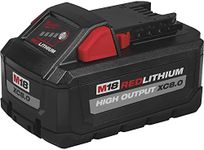
When choosing a Milwaukee battery, it's important to consider several key specifications to ensure you get the best performance and longevity for your tools. Milwaukee batteries are known for their durability and efficiency, but selecting the right one for your needs can make a significant difference in your work. Here are the key specs to consider and how to navigate them.VoltageVoltage indicates the power output of the battery. Higher voltage batteries provide more power, which is essential for heavy-duty tools and tasks. Milwaukee batteries typically come in 12V, 18V, and 28V options. For light-duty tasks and smaller tools, a 12V battery is sufficient. For most general-purpose tools and tasks, an 18V battery is ideal. For the most demanding tools and applications, a 28V battery will provide the necessary power. Choose the voltage based on the power requirements of your tools and the intensity of your tasks.
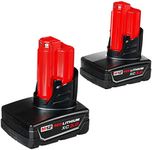
Amp-Hours (Ah)Amp-Hours (Ah) measure the battery's capacity, or how long it can run before needing a recharge. Higher Ah ratings mean longer run times. Milwaukee batteries range from 1.5Ah to 12Ah. For occasional use or light tasks, a lower Ah battery (1.5Ah to 3Ah) is sufficient. For regular use and moderate tasks, a mid-range Ah battery (4Ah to 6Ah) is a good choice. For heavy use and demanding tasks, a high Ah battery (9Ah to 12Ah) will provide the longest run time. Consider how long you need your tools to run between charges to determine the right Ah rating for you.
Battery TypeMilwaukee primarily offers Lithium-Ion (Li-Ion) batteries, which are known for their long life, lightweight, and consistent power output. Li-Ion batteries are preferable over older technologies like NiCad because they have a higher energy density, meaning they can store more energy in a smaller package. They also have no memory effect, so they can be charged at any time without reducing their capacity. If you need a reliable, long-lasting battery, choose a Li-Ion battery.
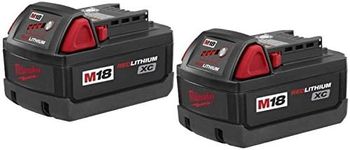
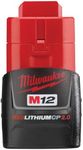
CompatibilityCompatibility refers to whether the battery will work with your existing Milwaukee tools. Milwaukee has different battery platforms, such as M12 and M18, which correspond to 12V and 18V tools, respectively. Ensure that the battery you choose matches the platform of your tools. Using the correct platform ensures optimal performance and safety. Check your tool's specifications or user manual to confirm compatibility before purchasing a battery.
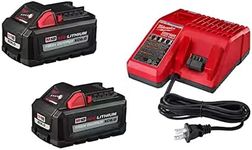
Charge TimeCharge time is the duration it takes to fully recharge the battery. Faster charge times mean less downtime between uses. Milwaukee offers standard and rapid chargers, with rapid chargers significantly reducing charge times. If you need your tools to be ready quickly, consider investing in a rapid charger. For occasional use, a standard charger may be sufficient. Evaluate how often you use your tools and how quickly you need them to be ready again to decide on the appropriate charge time.
Durability and WarrantyDurability refers to the battery's ability to withstand tough conditions and frequent use. Milwaukee batteries are designed to be durable, but some models offer enhanced features like shock-absorbing housings and water resistance. Additionally, consider the warranty offered by Milwaukee, as it can provide peace of mind and protection for your investment. If you work in harsh environments or use your tools frequently, look for batteries with enhanced durability features and a robust warranty.